
Vishnu and His Serpent Bed — The Story of Shesha
Introduction
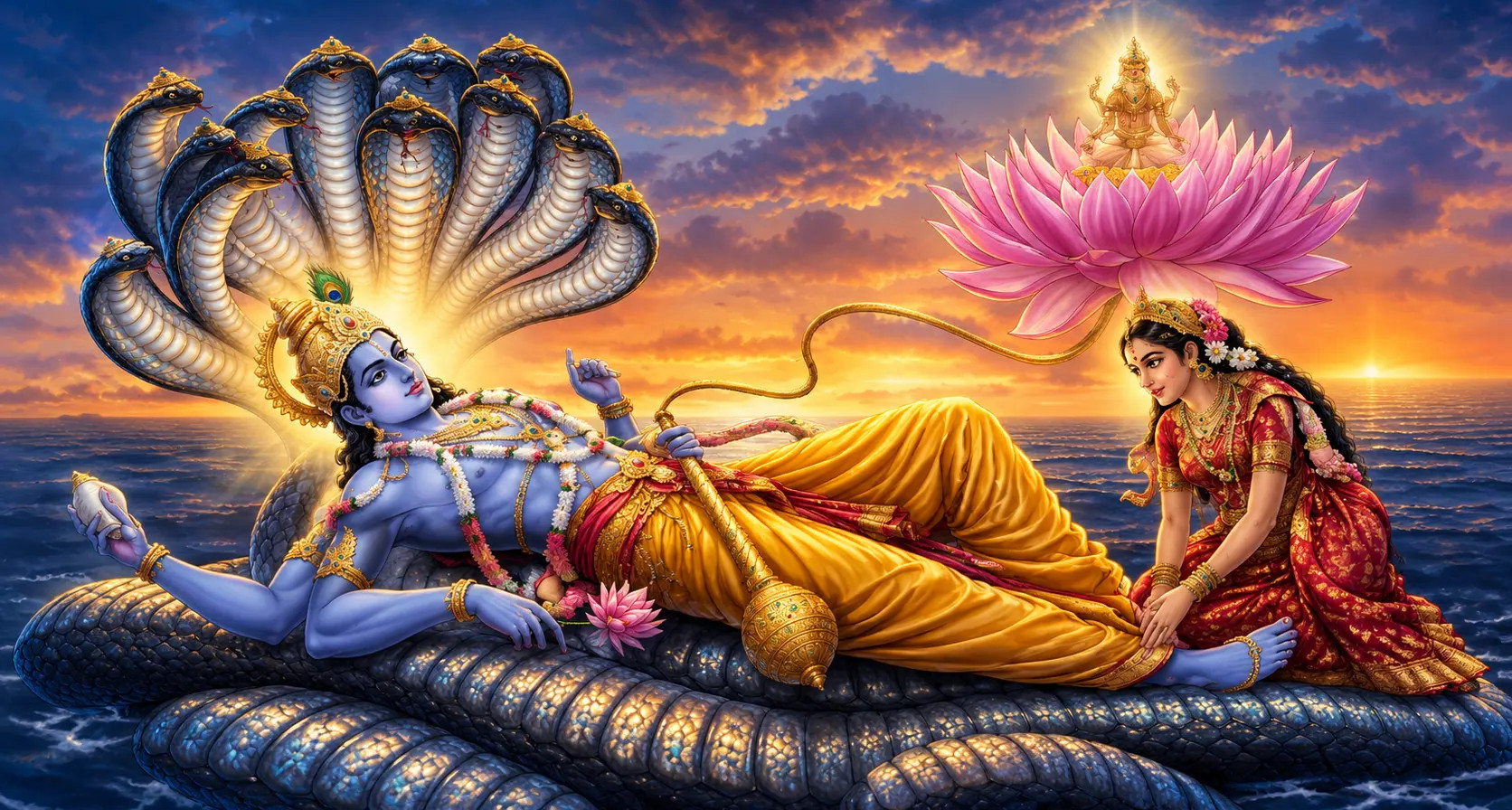
One of the most iconic and peaceful images in Hindu tradition is that of Lord Vishnu reclining on a great coiled serpent, floating on the cosmic ocean, with Goddess Lakshmi gently pressing his feet and a lotus rising from his navel bearing Lord Brahma. This image, known as Sheshashayana or Anantashayana, is found in temples, calendars and homes across India, and it is one of the most profound visual representations of the universe itself.
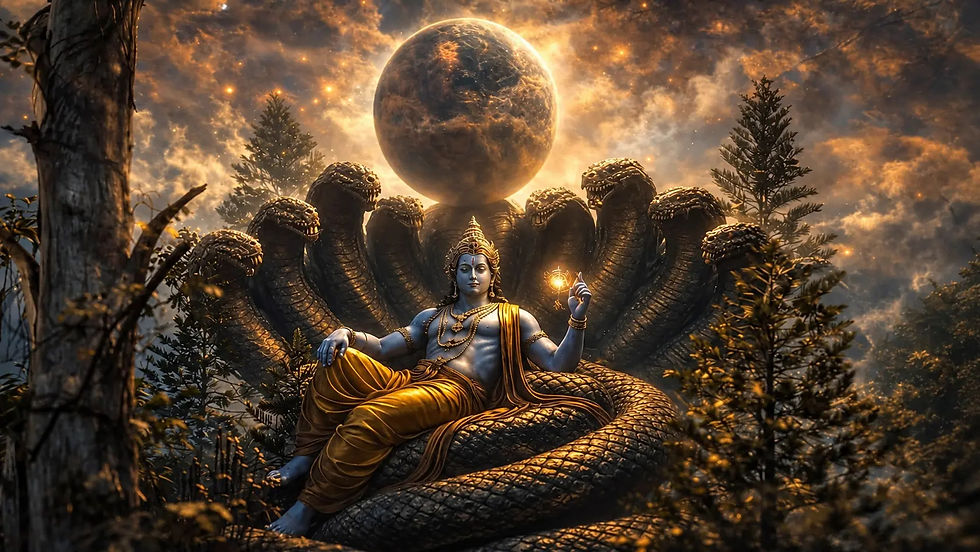
At the heart of this image is the serpent beneath Vishnu, known as Adishesha. In this blog, we explore who Adishesha is, why Vishnu chooses to rest upon him, and the deep cosmic and spiritual meanings woven into this timeless form.
"The Story of Shesha"
Who Is Shesha?
Shesha, also called Adishesha or Ananta ("the endless"), is the king of the nagas, the divine serpents of Hindu mythology. The name Shesha means "that which remains."
According to tradition, when the universe dissolves at the end of a cosmic cycle, everything is absorbed back into its source. Only Shesha remains, carrying Vishnu through the stillness before creation begins again.
Shesha is described with a thousand hoods, and the Puranas say he holds the entire cosmos, including the earth, upon them. His other name, Ananta, points to the infinite nature of time and existence itself.
Shesha's Devotion: Why He Became Vishnu's Bed
Shesha is known above all for his unwavering devotion. Traditional accounts describe him as a being who gave up personal ambition and worldly power to serve the Lord alone. He serves Vishnu in every possible form: as a bed, a canopy, a throne, a sandal and a pillow.
Seen this way, the serpent bed is not a mark of luxury. It is the highest expression of seva, selfless service. Shesha does not seek attention. He simply supports, with all his thousand heads, the one he loves.
The Cosmic Scene: Vishnu on the Ocean of Milk
Every element of the Anantashayana form carries meaning:
The ocean of milk (Kshirasagara): The calm, pure expanse represents the primordial waters of existence, the state before creation.
Vishnu reclining: Though he appears to rest, he is in yoga nidra, a conscious, alert sleep. The universe is held within his awareness even as he rests.
A lotus from his navel: From it Brahma, the creator, emerges to begin the work of creation.
Lakshmi at his feet: She represents prosperity and grace, and she serves alongside Shesha.
The serpent's hoods: The canopy of hoods shelters and honours the Lord, a symbol of protection.
Brahma Emerging from Vishnu's Navel
One of the most striking details of this form is the lotus that grows from Vishnu's navel, upon which Lord Brahma, the creator, is seated. This part of the image tells us how creation begins. As Vishnu rests in cosmic stillness, a golden lotus rises from his navel, and from within it emerges Brahma, who then goes on to shape and populate the universe according to the divine plan already present within Vishnu.
This detail beautifully shows the relationship between preservation and creation in Hindu thought. Brahma does not create independently or from nothing; he emerges from Vishnu, the sustaining consciousness of the universe, suggesting that creation itself is an extension of that which preserves and sustains all things. The navel, often associated with life's origin point, becomes the doorway through which a new universe begins to take form.
Lakshmi's Connection with Sheshashayana Vishnu
In most depictions of this form, Goddess Lakshmi, the goddess of wealth, grace and prosperity, is shown seated near Vishnu's feet, gently massaging them as he rests. This is far more than a decorative detail; it represents the inseparable bond between Vishnu and Lakshmi, between divine preservation and the abundance, grace and prosperity that sustains the world.
Lakshmi's presence at Vishnu's feet also reflects deep devotion and humble service, reminding devotees that even the Goddess of wealth considers nearness to the divine to be the greatest treasure of all. Her gentle attendance beside the resting Vishnu completes the picture of a universe held in balance by both power and grace, working together in quiet harmony.
Shesha Across the Ages: Avatars of the Serpent
Shesha's devotion did not end with serving as a bed. Tradition holds that he took birth alongside Vishnu's incarnations:

Lakshmana in the Ramayana: Shesha is said to have incarnated as Rama's devoted younger brother, who followed Rama into exile and served him faithfully.
Balarama in the Mahabharata and Bhagavata tradition: Krishna's elder brother is also revered as an incarnation of Shesha.
Ramanujacharya – Kali Yuga tradition: In some traditions, regarded as Shesha's return in the Kali Yuga as a great teacher.
Shesha appears as a companion and protector, always at the Lord's side, carrying the same spirit of devotion from the cosmic ocean into the stories of the earth.
The Symbolism: What the Serpent Bed Teaches Us
The story of Shesha is full of spiritual lessons:
Power at rest: A serpent is usually a creature to be feared. Here it becomes a bed of comfort, showing how great strength can be gentle when devoted to a higher purpose.
Humility in service: Shesha is a king, yet he serves quietly. True greatness lies in humility.
Calm amid cosmic forces: Vishnu rests peacefully on a serpent in the middle of an ocean, a reminder that inner stillness is possible even when the world is in motion.
Time and eternity: The coiled serpent is often read as a symbol of time, which cycles endlessly while the divine stays untouched by it.
Famous Temples Dedicated to Anantashayana Vishnu
Devotees travel to several renowned temples to see this reclining form:

Sree Padmanabhaswamy Temple, Thiruvananthapuram (Kerala): Vishnu reclines on Ananta, and the deity is viewed through three doors, each revealing a different part of his form.
Sri Ranganathaswamy Temple, Srirangam (Tamil Nadu): One of the largest functioning temple complexes in the world, with Ranganatha resting on Shesha as the presiding deity.
Other Ranganatha temples across South India: Including the Adi Ranganatha shrines along the Kaveri, which together are counted among the Pancharanga Kshetrams, the five sacred Ranganatha temples of the river.
Conclusion
Vishnu resting on Shesha is far more than a beautiful picture; it is a complete teaching on devotion, stillness and the quiet power that holds the universe together. Shesha, the serpent who gave up everything to serve, reminds us that true strength often looks like steadiness rather than spectacle, and that the deepest devotion asks for nothing in return.
May the Anantashayana form of Vishnu, and the silent, endless service of Shesha beneath him, inspire us to find calm within life's constant motion and to serve with the same humility and devotion.
Om Namo Narayanaya!
FAQs
Who is Shesha Nag
Shesha, also called Adishesha or Ananta, is the thousand-hooded king of serpents. Tradition describes him as Vishnu's bed on the ocean of milk and as the bearer of the earth on his hoods.
Why does Vishnu sleep on Shesha?
According to tradition, Shesha earned this place through selfless devotion. He refused to join his brothers' deceit, performed severe penance, and was accepted by Vishnu as his constant companion.
What does the name Shesha mean?
Shesha means "that which remains." It refers to the belief that he remains when the universe dissolves. His other name, Ananta, means "the endless."
Is Vishnu really sleeping on Shesha?
Tradition describes his rest as yoga nidra, a conscious, alert state in which the universe stays within his awareness.
Which avatars of Shesha are mentioned in tradition?
Lakshmana in the Ramayana and Balarama in the Bhagavata tradition and Ramanujacharya in the Kali Yuga tradition are revered as incarnations of Shesha.
Where can I see Vishnu reclining on Shesha?
At temples such as the Sree Padmanabhaswamy Temple in Thiruvananthapuram and the Sri Ranganathaswamy Temple in Srirangam.
Who is Lakshmi in the Anantashayana form?
She sits at Vishnu's feet and represents prosperity and grace.
Comments