
Pancha Bhoota Sthalams: The Five Lord Shiva of the Five Elements”
Introduction
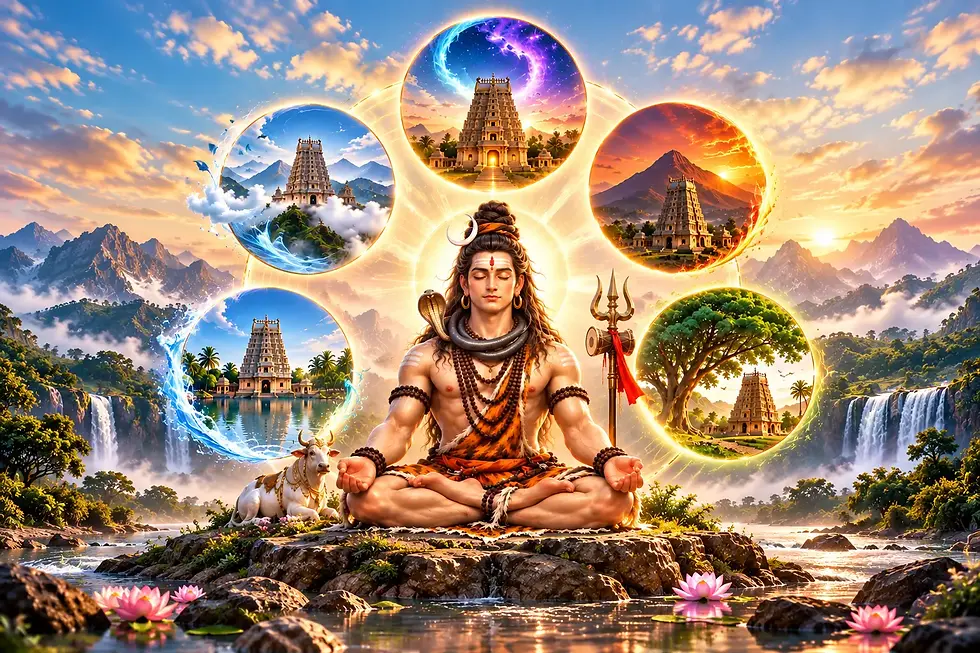
According to Hindu tradition, the world is made of five elements, the Pancha Bhoota: earth, water, fire, air and space. In South India, five ancient Shiva temples are each said to represent one of these elements. Together they are known as the Pancha Bhoota Sthalams, and pilgrims visit all five to worship Lord Shiva in the form of each element.
Four of the temples are in Tamil Nadu and one is in Andhra Pradesh. Each has its own deity, its own legend and its own way of showing that the divine is present in nature itself.
What Does “Pancha Bhoota Sthalam” Mean?
“Pancha” means five, “Bhoota” means element and “Sthalam” means sacred place. The five temples are:
Earth (Prithvi): Nilam
Water (Appu or Jala): Neer
Fire (Agni or Tejas): Neruppu
Air (Vayu): Kaatru
Space (Akasha): Aagayam
In the first four, Shiva is worshipped as a lingam that represents the element. In Chidambaram, the element of space is formless, so the temple honours Shiva in a different way.
The History of the Pancha Bhoota Sthalams
The Pancha Bhoota Sthalams bring together two very old ideas: the belief that the world is made of five elements, and the devotion to Lord Shiva that flourished in South India. Their history is best understood through the idea, the saints who sang of the temples and the rulers who built and cared for them.
The idea of the five elements. The thought that creation is made of earth, water, fire, air and space is ancient in Indian philosophy. Early texts such as the Upanishads speak of the elements emerging in order, beginning with space. The Pancha Bhoota Sthalams give this idea a physical form, with one temple standing for each element.
The Nayanar saints and their hymns. A great part of what we know about these temples comes from the Shaiva devotional tradition of Tamil Nadu. The Nayanars, the saint-poets of Shiva, travelled from temple to temple and sang hymns in praise of the Lord. Among them:
Appar, Sambandar and Sundarar composed the Thevaram hymns, which praise Shiva at many sacred places, including the Pancha Bhoota temples
Manikkavasagar composed the Tiruvasagam, which is also associated with places such as Chidambaram and Tiruvannamalai
Kannappa Nayanar, one of the 63 Nayanars, is remembered for his devotion at Srikalahasti
These hymns are traditionally dated to roughly the 7th to 9th centuries and are among the earliest literary records of the temples.
The rulers who built and cared for them. Over the centuries, the temples were built, enlarged and endowed by several dynasties. According to inscriptions and tradition:
The Pallavas ruled from Kanchipuram, and the city became a major centre of temples and learning
The Cholas were great patrons of Shaiva temples, and Chidambaram is especially associated with them. Many Chola kings are remembered as devotees of Nataraja
The Vijayanagara rulers later added towering gateways and large halls to several of these temples, including Kanchipuram and Tiruvannamalai
Tradition also credits the early Chola king Kocengannan with building temples for Shiva, and Thiruvanaikaval is among those linked with him. As a result, what we see today at each temple is the work of many centuries, not one period.
The Five Pancha Bhoota Sthalams
Element | Temple Name | Location | Manifestation / Lingam |
Earth (Prithvi) | Ekambareswarar Temple | Kanchipuram, Tamil Nadu | Sand Lingam (Prithvi Lingam), praised with jasmine oil |
Water (Appu) | Jambukeswarar Temple | Thiruvanaikaval (Trichy), Tamil Nadu | Water spring flowing beneath the sanctum (Appu Lingam) |
Fire (Agni) | Arunachaleswarar Temple | Thiruvannamalai, Tamil Nadu | Fire/Light represented by the Arunachala hill and annual lamp |
Air (Vayu) | Sri Kalahasteeswara Temple | Srikalahasti, Andhra Pradesh | White air/wind lingam (Vayu Lingam) on the Swarnamukhi River |
Space (Akasha) | Thillai Nataraja Temple | Chidambaram, Tamil Nadu | Formless space (Akasha Rahasya) / cosmic dancer Nataraja |
The Sand Lingam Under the Mango Tree: Kanchipuram (Earth)
The Ekambareswarar Temple in Kanchipuram is the Pancha Bhoota Sthalam of earth. Its lingam is called the Prithvi Lingam, and the temple is dedicated to Lord Shiva as Ekambareswarar, a name traditionally understood as “the Lord of the mango tree.”
The legend of the sand lingam. According to the legend, the goddess Parvati made a lingam of sand under a mango tree and worshipped it with deep devotion. When a flood threatened to wash the lingam away, she did not let go. She held it close to protect it. The temple remembers this story of steady devotion, and the earth element reminds devotees of patience and stability.
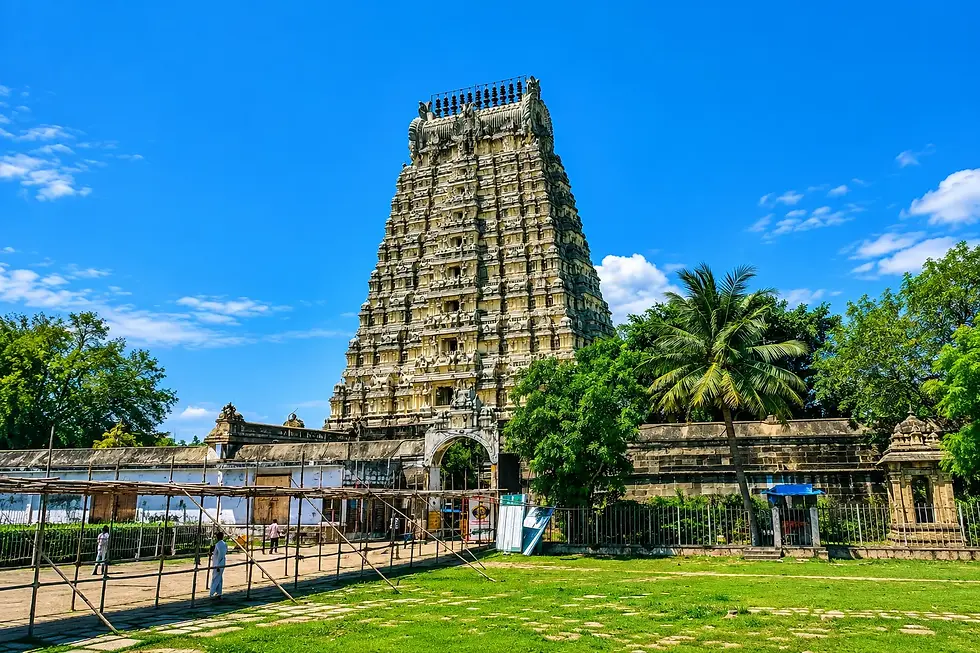
What makes the Kanchipuram sthalam special:
The Prithvi Lingam: The lingam represents the element of earth, and the story connects it with a lingam made from sand.
The sacred mango tree: The temple is linked with an ancient mango tree, which devotees hold in great reverence. Traditionally, it is said to be extremely old.
The goddess Kamakshi: In Kanchipuram, Parvati is worshipped as Kamakshi, and the city is closely associated with her devotion to Shiva.
A temple of many ages: Like many South Indian temples, it has grown over centuries, and devotees visit it throughout the year.
What the earth element teaches. The earth is steady. It holds everything, from the smallest seed to the tallest mountain, and it does not move. Parvati’s devotion in this legend carries the same quality: she stayed steady when the flood came. Devotees draw from this a lesson in:
Patience: Holding on when the situation is difficult
Stability: Staying grounded when everything around you shifts
Steady devotion: Continuing to worship, whatever the circumstances
These are the meanings devotees draw from the tradition, and different communities may emphasise different parts of the story.
The Lingam Surrounded by Water: Thiruvanaikaval (Water)
The Jambukeswarar Temple in Thiruvanaikaval, near Tiruchirappalli, is the Pancha Bhoota Sthalam of water. Its lingam is called the Appu Lingam (Jala Lingam), and the sanctum is known for water that is said to flow continuously around it. The temple is dedicated to Lord Shiva as Jambukeswarar, a name traditionally linked with the sacred jambu (naaval) tree.
The legend of the elephant and the spider. The name Thiruvanaikaval refers to an elephant, and the temple is linked with the story of an elephant and a spider that both worshipped Shiva in this place. According to tradition, the elephant brought water to bathe the lingam, while the spider spun a web above it to shelter it. Each served Shiva in its own way, and the story is remembered as a lesson in how every devotee, large or small, can offer worship.
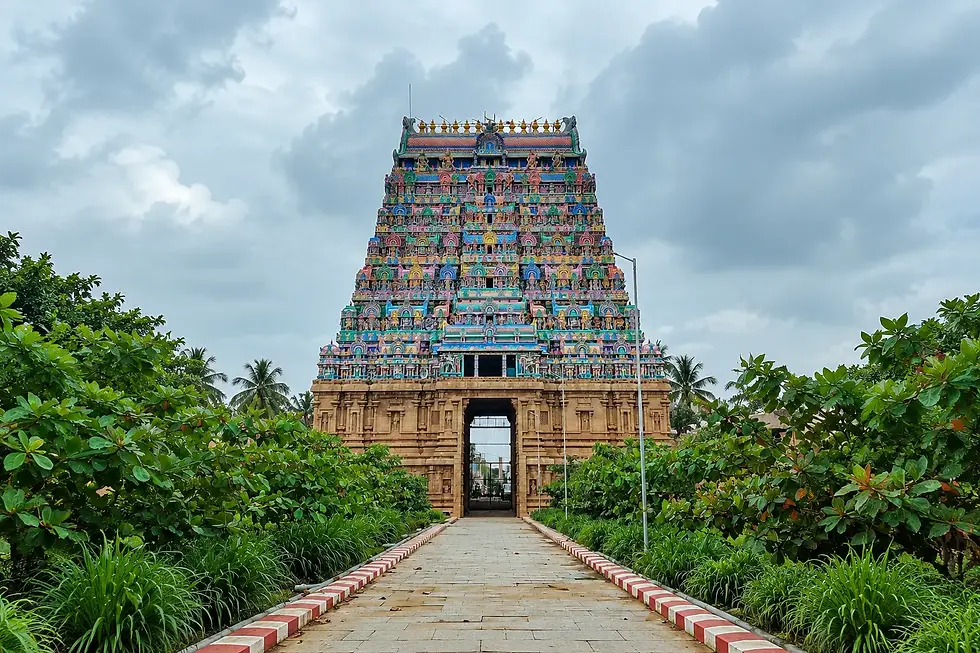
What makes the Thiruvanaikaval sthalam special:
The Appu Lingam: The lingam represents the element of water, and the water flowing around it in the sanctum is the sign devotees associate with this sthalam.
The goddess Akilandeswari: The goddess here is Akilandeswari, whose shrine is a major part of the temple’s worship.
The sacred jambu tree: The temple’s name connects it with the jambu tree, which is held in reverence.
A temple of two devotees: The elephant and the spider are remembered as devotees of equal standing, one huge and one tiny.
What the water element teaches. Water flows, cleanses and adapts itself to any shape. In the legend, both the elephant and the spider offered what they could, whether it was water or a web. Devotees draw from this a lesson in:
Purity: Approaching worship with a clean heart
Flow: Letting devotion move freely, like water
Humility: Seeing that every offering, large or small, is valued
These are the meanings devotees draw from the tradition, and different communities may emphasise different parts of the story.
The Column of Fire and the Sacred Hill: Tiruvannamalai (Fire)
The Arunachaleswarar Temple in Tiruvannamalai is the Pancha Bhoota Sthalam of fire. Its lingam is called the Agni Lingam (Tejas Lingam), and the whole Annamalai hill behind the temple is held sacred as Shiva himself. Devotees see the temple and the hill as one sacred whole.
The legend of the endless fire. The legend tells of a quarrel between Brahma and Vishnu over who was supreme. To end the argument, Shiva appeared as an endless column of fire, and neither could find its beginning or end. According to the tradition:
Vishnu took the form of a boar and dug downward to find the base.
Brahma took the form of a swan and flew upward to find the top.
Neither succeeded. Vishnu admitted that he could not find the base, while Brahma is said to have claimed falsely that he had seen the top, and was rebuked for it.
The story is remembered as a lesson in humility, since even the greatest gods could not measure the Lord.
Karthigai Deepam. Every year, during the festival of Karthigai Deepam, a great lamp is lit on top of the hill to recall this story. Devotees gather from far and wide to see the flame that burns on the summit as the evening falls.
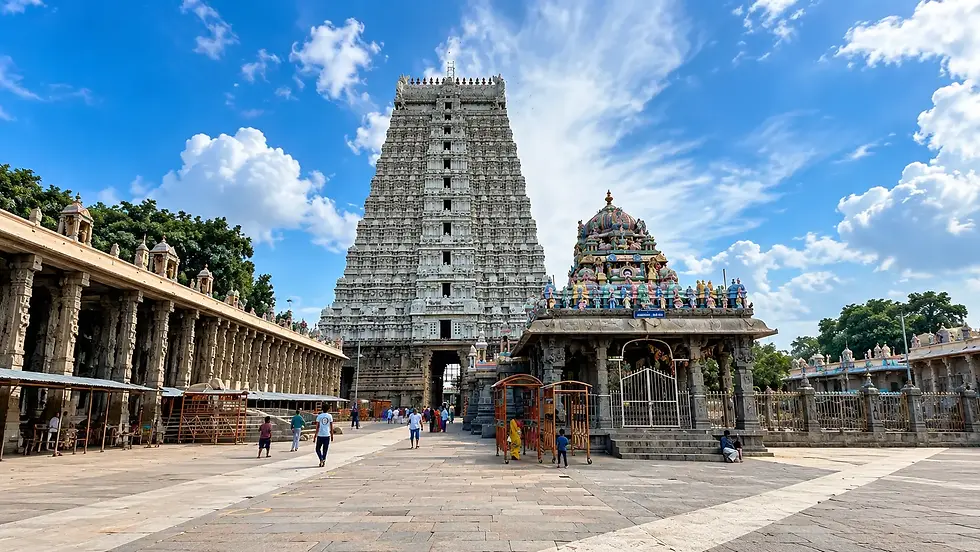
What makes the Tiruvannamalai sthalam special:
The Agni Lingam: The lingam represents the element of fire, and the legend of the column of fire is the heart of the sthalam.
The sacred Annamalai hill: The hill itself is worshipped as Shiva, which is rare among the sacred places of the tradition.
The goddess Unnamulai Amman: The goddess is worshipped alongside Arunachaleswarar in the temple.
Girivalam: Many devotees walk around the hill as an act of worship, especially on full moon days.
What the fire element teaches. Fire gives light, warmth and energy, and it also burns away what is not needed. In the legend, the endless fire showed that the divine is beyond measure. Devotees draw from this a lesson in:
Energy: Giving one’s devotion warmth and strength
Light: Letting knowledge and truth clear away ignorance
Humility: Recognising that the divine cannot be measured by pride
These are the meanings devotees draw from the tradition, and different communities may emphasise different parts of the story.
The Lamp That Flickers Without Wind: Srikalahasti (Air)
The Srikalahasti Temple in Andhra Pradesh is the Pancha Bhoota Sthalam of air. Its lingam is called the Vayu Lingam, and the temple is one of the most important Shiva shrines of the south. Devotees say that the lamp in the sanctum flickers as though in a breeze, even though the inner chamber has no windows. For many, this is the sign that the divine presence here is the element of air itself.
The three devotees behind the name. The name Srikalahasti combines three devotees of Shiva who are remembered at this place:
Sri: a spider
Kala: a snake
Hasti: an elephant
According to the tradition, each of them worshipped Shiva in its own way, with great devotion, and the temple’s name keeps all three alive in memory.
The devotion of Kannappa Nayanar. The temple is also associated with Kannappa Nayanar, remembered for his unmatched devotion. According to the well-known story, Kannappa was a hunter who worshipped the lingam in his own simple way. When he saw that the lingam seemed to be bleeding from an eye, he offered one of his own eyes to heal it. As he prepared to offer the other, Shiva stopped him and blessed him. The story is told as an example of pure, wholehearted devotion that needs no ritual or learning.
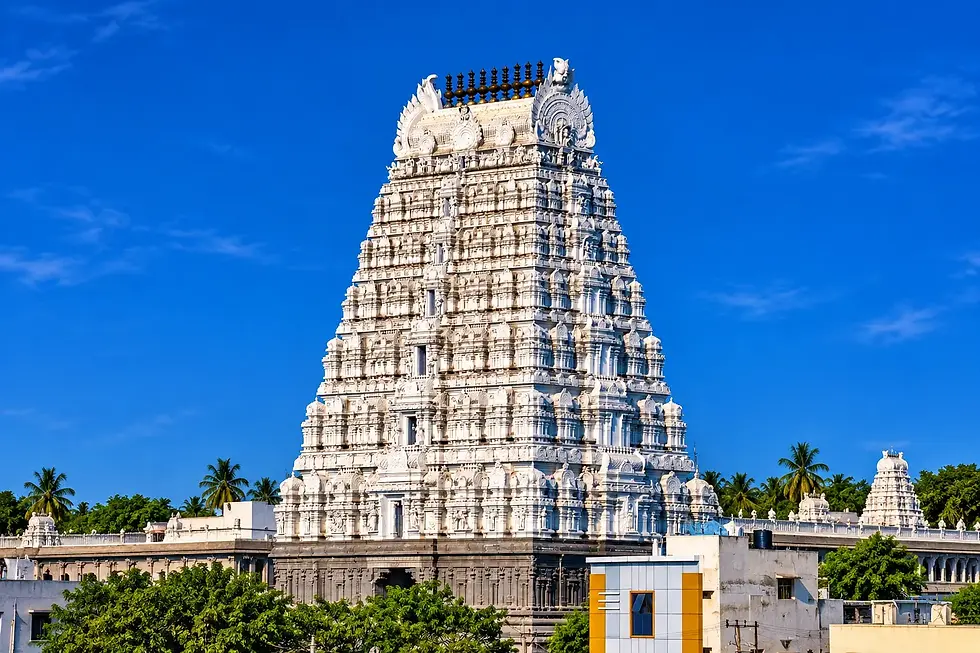
What makes the Srikalahasti sthalam special:
The Vayu Lingam: The lingam represents the element of air, and the flickering lamp is the sign devotees associate with this sthalam.
The goddess Gnana Prasunambika: The goddess is worshipped alongside Shiva in the temple.
Three devotees in one name: The spider, the snake and the elephant remind devotees that worship is open to every living being.
A place of Kannappa’s story: The temple is closely linked with one of the best-loved stories of devotion in the Shaiva tradition.
What the air element teaches. Air cannot be seen or held, yet we cannot live without it. It moves freely, reaches everywhere and sustains every living being. Devotees draw from this a lesson in:
Life: Recognising the divine presence in every breath
Movement: Keeping devotion alive and active
Simplicity: Understanding that sincere devotion matters more than outward display
These are the meanings devotees draw from the tradition, and different communities may emphasise different parts of the stories.
The Secret of Chidambaram: Thillai Nataraja Temple (Space)
The Thillai Nataraja Temple in Chidambaram is the Pancha Bhoota Sthalam of space (Akasha). Unlike the others, it does not centre on a lingam. Instead, Shiva is worshipped here as Nataraja, the Lord of the Cosmic Dance, and the temple is among the most celebrated Shiva shrines in Tamil Nadu.
The Chidambara Rahasyam. The temple is also known for the Chidambara Rahasyam, the “secret of Chidambaram.” Behind a curtain in the sanctum, there is an open space, which is said to represent the formless, all-pervading divine. Devotees see the empty space itself as the object of worship, which is why it stands for the element of space. When the curtain is drawn aside, devotees are traditionally said to see not an image but an open space, and a garland of golden leaves hung there to mark the unseen presence.
Shiva as Nataraja. In the main shrine, Shiva appears as Nataraja, dancing the cosmic dance. The traditional image shows:
The damaru (drum) in one raised hand, recalling the sound of creation
The flame in another hand, a symbol of fire
The abhaya mudra, the gesture of reassurance
One foot raised in the dance, and the other resting on a small figure
The ring of flames surrounding the whole figure
This form is one of the most celebrated subjects of Chola bronze sculpture and is known across the world.
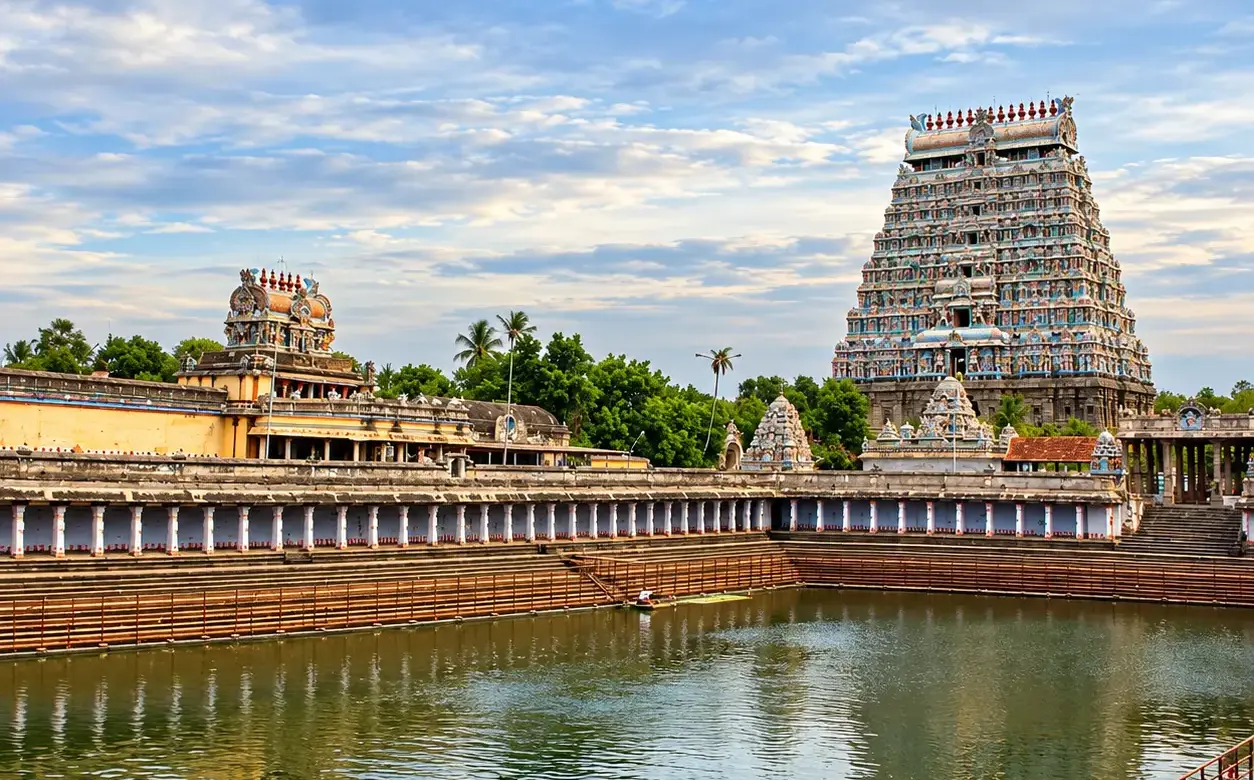
What makes the Chidambaram sthalam special:
Space instead of a lingam: It is the one Pancha Bhoota temple where the element is formless, and worship centres on the open space and the dancing form of Shiva.
The goddess Sivakami: The goddess is worshipped here as Sivakami, alongside Nataraja.
The name itself: According to a common explanation, “Chidambaram” combines chit, meaning consciousness, with ambaram, meaning sky or space.
A temple of the dance: Chidambaram is closely associated with the Ananda Tandava, the dance of bliss, and with the arts that grew around it.
What the space element teaches. Space holds everything, yet it cannot be touched or seen. It makes room for earth, water, fire and air to exist at all. In this sthalam, the empty space behind the curtain reminds devotees that the divine is beyond form. Devotees draw from this a lesson in:
Openness: Making room within oneself for devotion and understanding
The infinite: Recognising that the divine cannot be limited to one form
Stillness: Finding calm within the movement of life, like the still centre of the cosmic dance
These are the meanings devotees draw from the tradition, and different communities may emphasise different parts of the stories.
Nataraja: The Cosmic Dancer in Sacred Art
Chidambaram has given the world one of its most famous sacred images. Nataraja is shown dancing within a ring of flames, and the traditional image includes:
The damaru (drum) in one raised hand, recalling the sound of creation
The flame in another hand, a symbol of fire
The abhaya mudra, the gesture of reassurance, raised in another hand
One foot raised in the dance, and the other resting on a small figure
The ring of flames that surrounds the whole figure
This image is also one of the most celebrated subjects of Chola bronze sculpture.
What the Five Elements Teach Us
The Pancha Bhoota Sthalams carry a simple idea: the divine is present in the world around us. Each temple shows a different face of this idea:
Earth: Steadiness and patience
Water: Purity and flow
Fire: Energy and light
Air: Life and movement
Space: Openness and the infinite
These are the meanings devotees draw from the tradition, and different communities may emphasise different parts of the stories.
Visiting the Five Temples
Many devotees plan a pilgrimage to all five temples, either in one journey or over many years. If you are planning a visit:
Check the temple timings and festival dates before you travel
Follow the customs of each temple, which differ from place to place
Allow time for each darshan, since some temples are very busy during festival days
FAQs
What are the Pancha Bhoota Sthalams?
Five ancient Shiva temples in South India, each representing one of the five elements: earth, water, fire, air and space.
Which are the five Pancha Bhoota temples?
Earth: Ekambareswarar Temple, Kanchipuram
Water: Jambukeswarar Temple, Thiruvanaikaval
Fire: Arunachaleswarar Temple, Tiruvannamalai
Air: Sri Kalahasteeswara Temple, Srikalahasti
Space: Thillai Nataraja Temple, Chidambaram
Where are the Pancha Bhoota Sthalams located?
Four are in Tamil Nadu (Kanchipuram, Thiruvanaikaval, Tiruvannamalai, Chidambaram) and one, Srikalahasti, is in Andhra Pradesh.
Why is there no lingam in Chidambaram?
Chidambaram represents space, which is formless. Shiva is worshipped as Nataraja, along with the open space behind the curtain known as the Chidambara Rahasyam.
Is there a fixed order to visit the five temples?
No strict rule. Many follow the order of the elements, but devotees can visit in any order, in one journey or over several years.
Conclusion
The Pancha Bhoota Sthalams show Lord Shiva in the earth beneath our feet, the water that flows, the fire that burns, the air we breathe and the space that holds everything. Visiting them is a way of seeingthe divine in the world itself, and their legends continue to be told in temples across South India.
Comments