
Dasavatharam: The Ten Avatars of Vishnu, From Saviour to Restorer
Updated: 5 days ago
Introduction
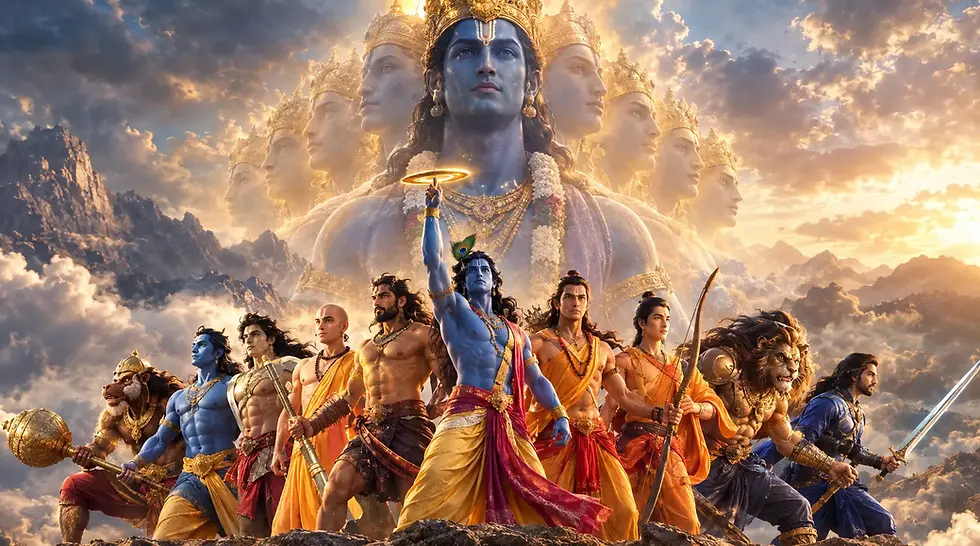
Hindu tradition holds that the universe is never left to run on its own. Lord Vishnu, the preserver, watches over it, and whenever dharma (righteousness) weakens and adharma (injustice and chaos) grows strong, he steps into the world in a chosen form to restore balance. In the Bhagavad Gita, Krishna says exactly this: whenever righteousness declines, he takes birth to protect the good and set the world right again.
Each of these descents arrives at a different moment of crisis. Sometimes the world is drowning, sometimes it is held captive, and sometimes it is ruled by a tyrant who believes nothing can touch him. In every case, the form Vishnu takes is exactly what the moment demands: a fish for the flood, a tortoise to hold up a sinking mountain, a man-lion to answer a boon that seemed unbreakable, and a king to show the ideal way to live.
The ten best-known forms are celebrated across India in temple sculpture, classical dance, festivals like Onam and Diwali, and the Golu displays of Navratri. For devotees, they are a living reminder that the Divine never abandons the world. For storytellers, they are among the richest tales in Indian tradition, found in the Puranas, the Ramayana, and the Mahabharata.
In this blog, we walk through these ten avatars one by one to understand why each appeared, what happened, and what it still teaches us today.
Meaning of Dasavatharam
The word Dasavatharam comes from Sanskrit and is made of two parts: “dasa”, meaning ten, and “avatara”, meaning descent. So Dasavatharam means the ten descents of Lord Vishnu.
The word “avatara” itself is formed from “ava” (down) and “tri” (to cross over), which together suggest the Divine coming down from a higher realm into the world of human beings. It does not mean birth in the ordinary sense. The Ten Avatars of Vishnu It means a deliberate descent, taken up with a purpose, whenever the world needs protection.
In Tamil, the word is commonly written as Dasavatharam or Dasavathaaram, and in Sanskrit and other Indian languages it is Dashavatara. All of them refer to the same ten forms: Matsya, Kurma, Varaha, Narasimha, Vamana, Parashurama, Rama, Krishna, Buddha, and Kalki.
The Ten Avatars of Vishnu and Their Yugas
No. | Avatar | Meaning | Yuga |
1 | Matsya | Fish | Satya Yuga |
2 | Kurma | Tortoise | Satya Yuga |
3 | Varaha | Boar | Satya Yuga |
4 | Narasimha | Man-Lion | Satya Yuga |
5 | Vamana | Dwarf Brahmin | Treta Yuga |
6 | Parashurama | Warrior Sage with the Axe | Treta Yuga |
7 | Rama | The Ideal King | Treta Yuga |
8 | Krishna | The Divine Statesman and Charioteer | Dwapara Yuga |
9 | Buddha | The Teacher of Compassion and Non-Violence | Kali Yuga |
10 | Kalki | The Warrior on the White Horse | End of Kali Yuga (yet to come) |
The first four avatars appear in Satya Yuga, the age of truth. The next three come in Treta Yuga, and Krishna in Dwapara Yuga. Buddha appears in the present age, Kali Yuga, and Kalki is expected at its close.
The Story of Each Avatar
1. Matsya Avatar: (The Saviour)
At the end of a world cycle, a great flood was about to swallow the earth, and the demon Hayagriva had stolen the Vedas. Vishnu appeared as a tiny fish in King Satyavrata’s hands and kept growing until no pot, pond, or river could hold him. As a giant fish, he towed Manu’s boat to safety and recovered the Vedas.
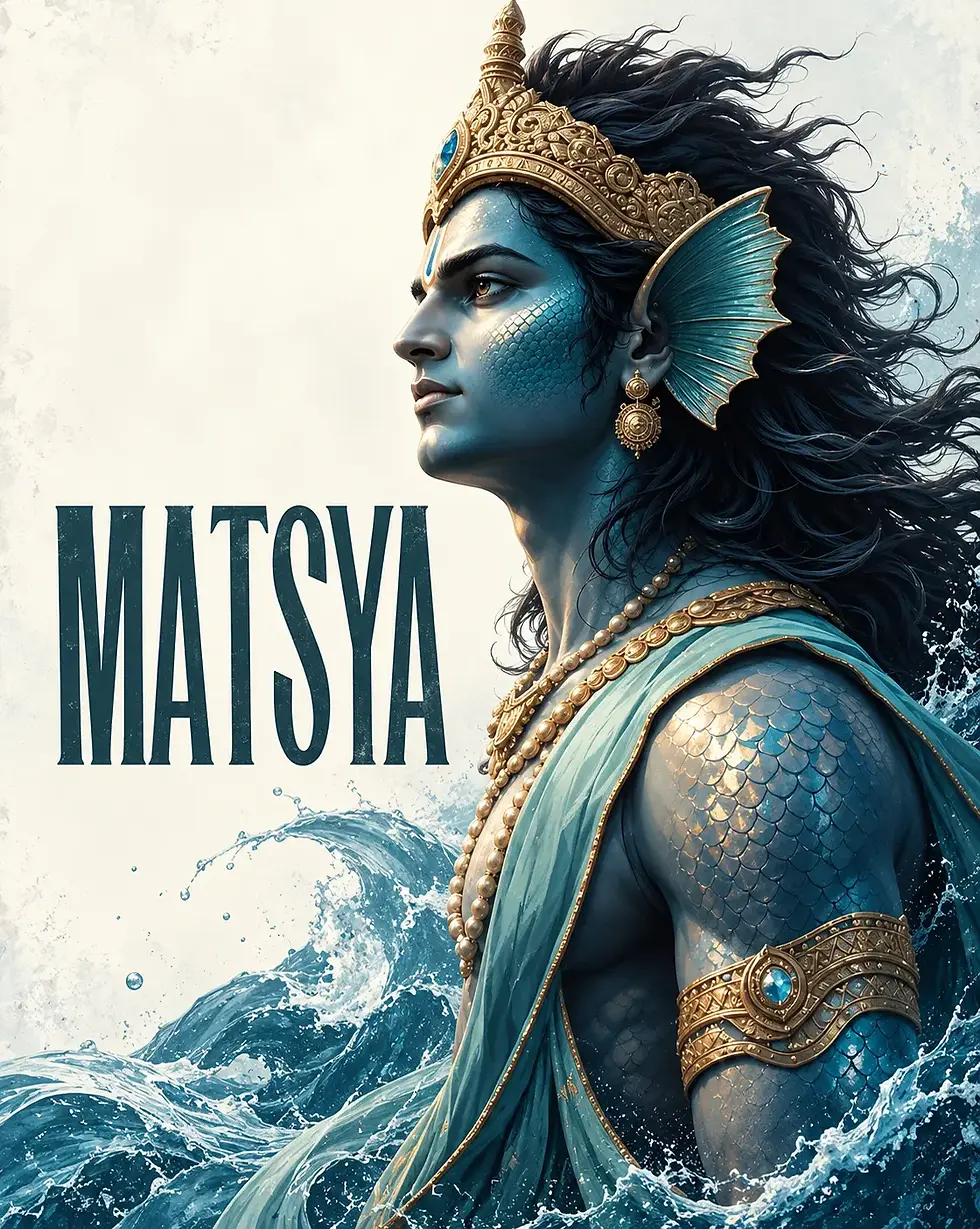
Why the name: “Matsya” means fish in Sanskrit.
How he took the avatar: He appeared as a small fish asking for protection, then revealed himself.
What he faced: A world-ending flood and the theft of the Vedas by Hayagriva.
Outcome: Manu, the seven sages, seeds, and animals were saved, and the Vedas were restored.
2. Kurma Avatar: (The Supporter)
The devas and asuras were churning the Ocean of Milk to obtain amrita, the nectar of immortality. Mount Mandara, used as the churning rod, began to sink into the sea. Vishnu became a giant tortoise and held the mountain steady on his back.
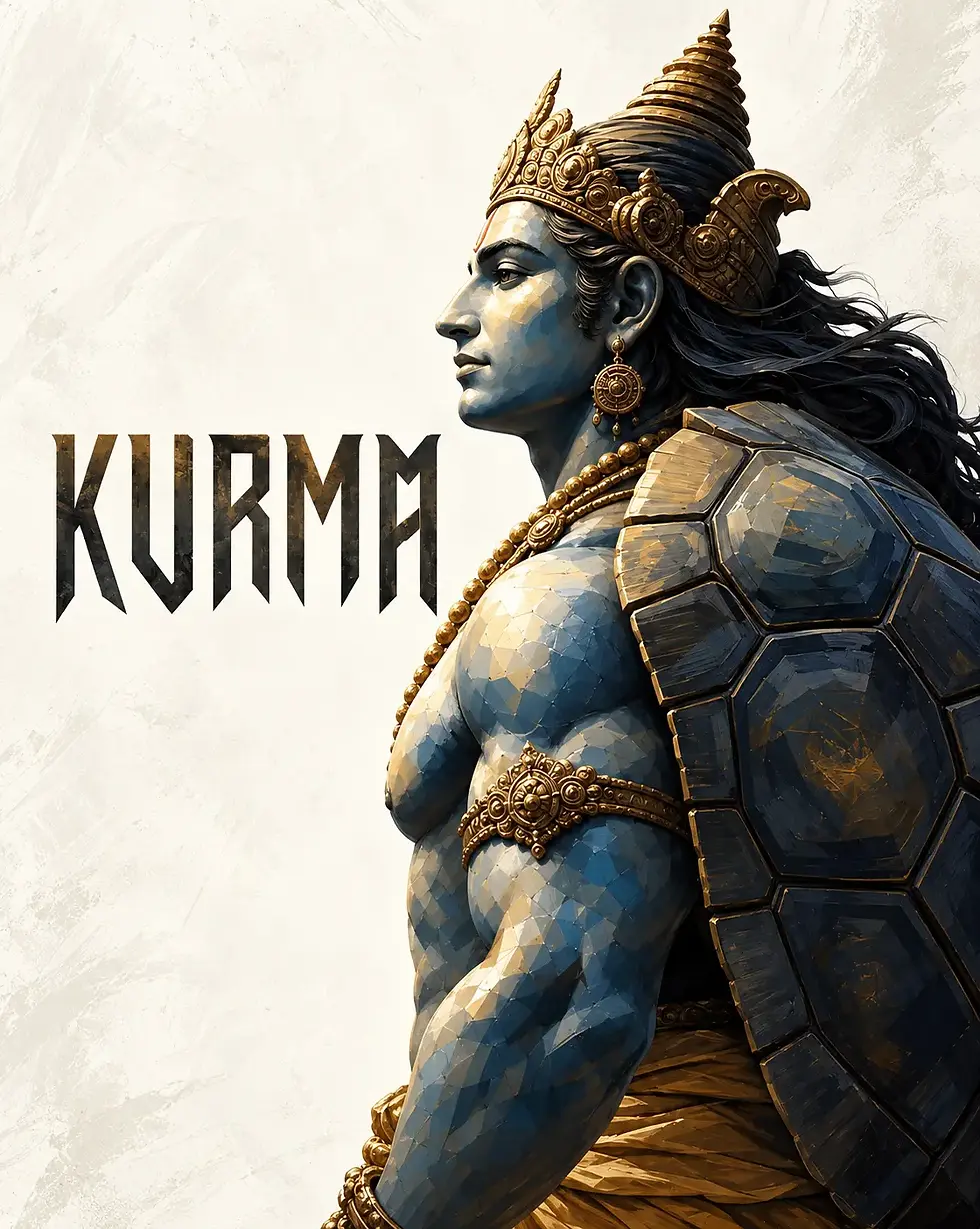
Why the name: “Kurma” means tortoise.
How he took the avatar: He dived into the ocean in tortoise form beneath the sinking mountain.
What he faced: The unstable mountain, the strain of the churning, and the poison Halahala that rose from the sea.
Outcome: The churning continued and gave Lakshmi, Dhanvantari, and the pot of amrita.
3. Varaha Avatar: (The Rescuer)
The demon Hiranyaksha dragged Bhudevi (Mother Earth) to the bottom of the cosmic ocean. Vishnu appeared as a mighty boar, dived into the depths, and fought the demon in a long battle. He then lifted the Earth on his tusks and placed her back in her rightful position.
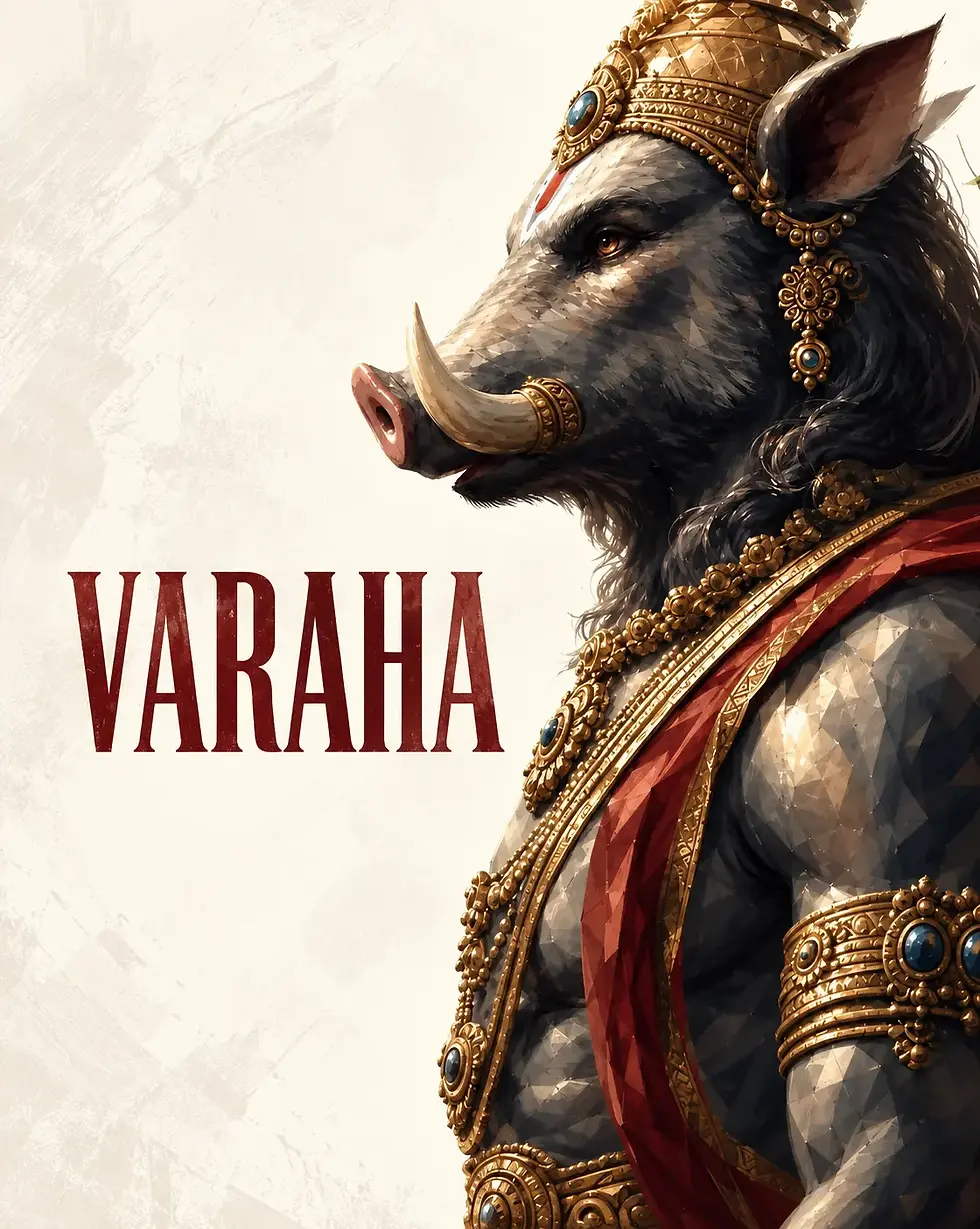
Why the name: “Varaha” means boar.
How he took the avatar: He emerged from Brahma’s nostril as a tiny boar and grew to a colossal size.
What he faced: Hiranyaksha’s powerful demon army and a long battle in the deep waters.
Outcome: He killed the demon, lifted the Earth on his tusks, and set her back in place.
4. Narasimha Avatar: (The Fierce Protector)
The demon king Hiranyakashipu had a boon that made him almost impossible to kill, and he tortured his own son Prahlada for worshipping Vishnu. When he struck a pillar and mocked Prahlada’s faith, Vishnu burst out of it as Narasimha, half man and half lion. He ended the tyrant without breaking a single condition of the boon.
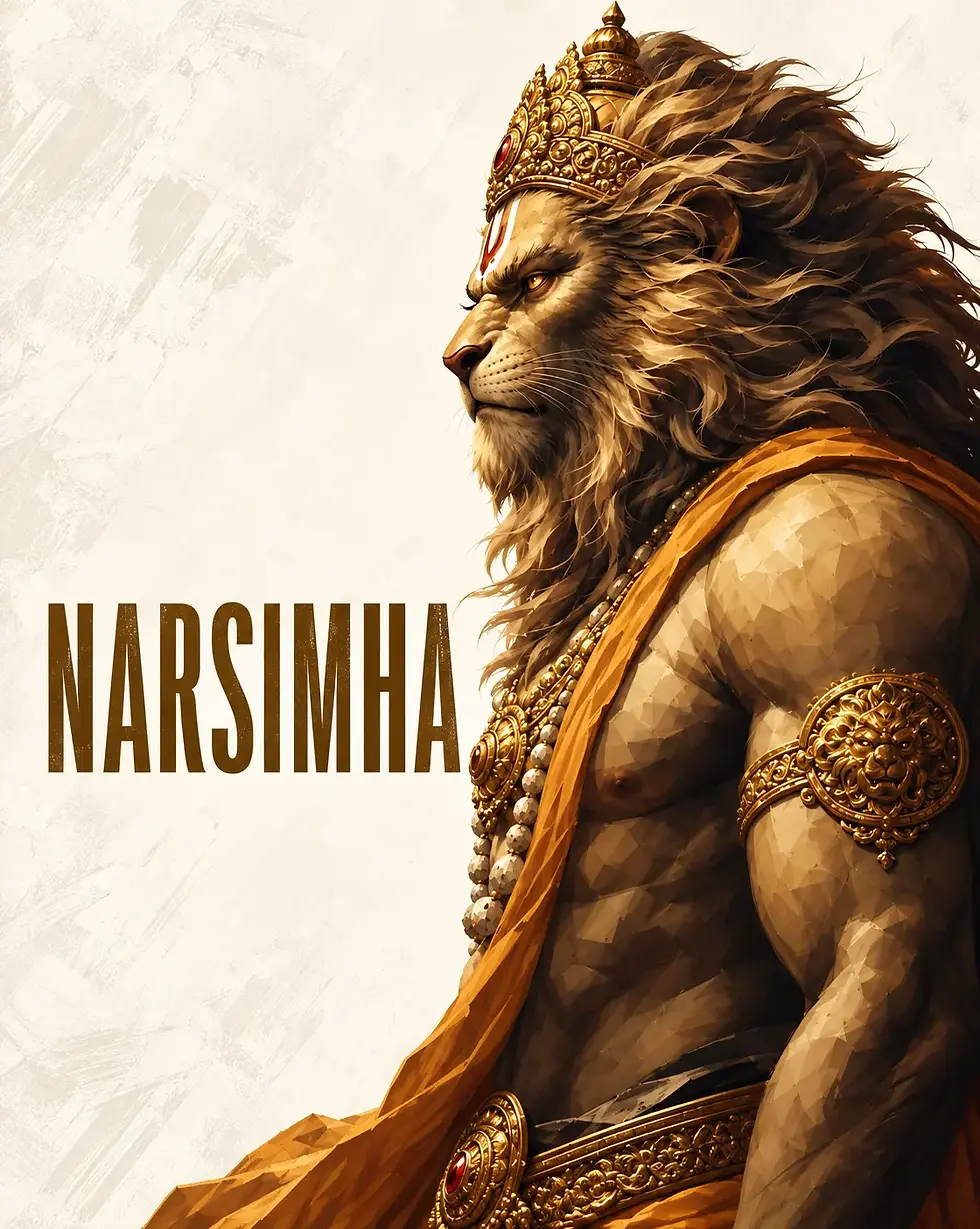
Why the name: “Nara” means man and “simha” means lion, so he is half man and half lion.
How he took the avatar: He emerged from a palace pillar, a form that fit none of the boon’s categories.
What he faced: A tyrant who thought he was unkillable and who persecuted a child devotee.
Outcome: At twilight, on the threshold, with the demon on his lap and using his claws, Narasimha ended Hiranyakashipu without breaking a single condition of the boon.
5. Vamana Avatar: (The Humbler)
King Mahabali was a generous and powerful ruler who had conquered the three worlds, and the devas feared his growing strength. Vishnu came to his sacrifice as a small Brahmin boy and asked for just three paces of land. Mahabali agreed, and the boy grew to a cosmic size.
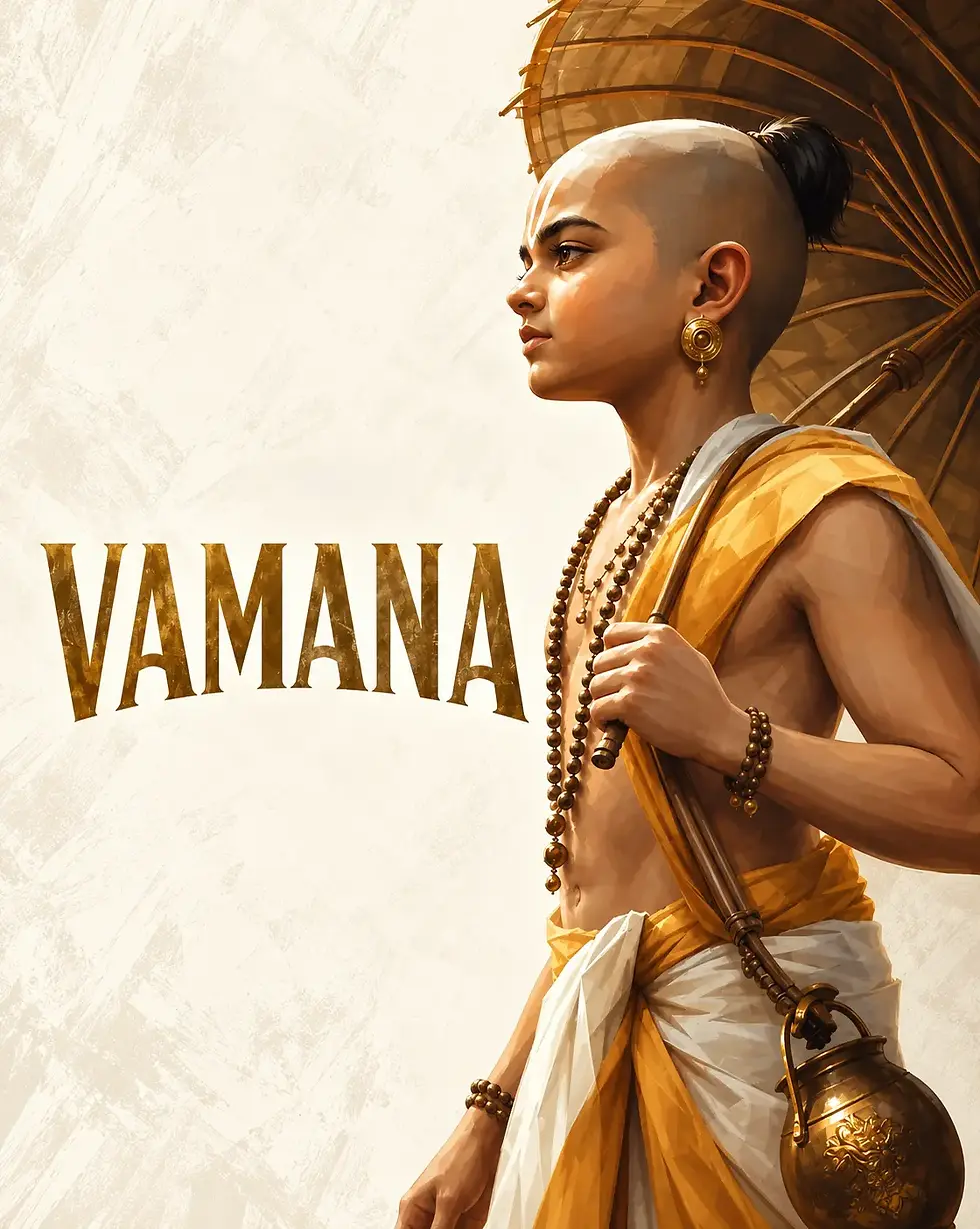
Why the name: “Vamana” means dwarf. After he grew to cosmic size, he is also called Trivikrama, “the one of three strides.”
How he took the avatar: He was born to Aditi and Kashyapa as a small boy and approached Mahabali humbly.
What he faced: A powerful, generous king whom the guru Shukracharya had warned not to grant the boy’s wish.
Outcome: One step covered the earth, the second the heavens, and the third rested on Mahabali’s head, sending him to Sutala. This is remembered in the festival of Onam.
6. Parashurama Avatar: (The Warrior Sage)
Many kings had grown arrogant and were oppressing the people, misusing their power. After the king Kartavirya Arjuna harmed his father’s ashram, Parashurama, son of the sage Jamadagni, rose against them. Armed with the axe given by Shiva, he cleared the earth of tyrannical rulers.
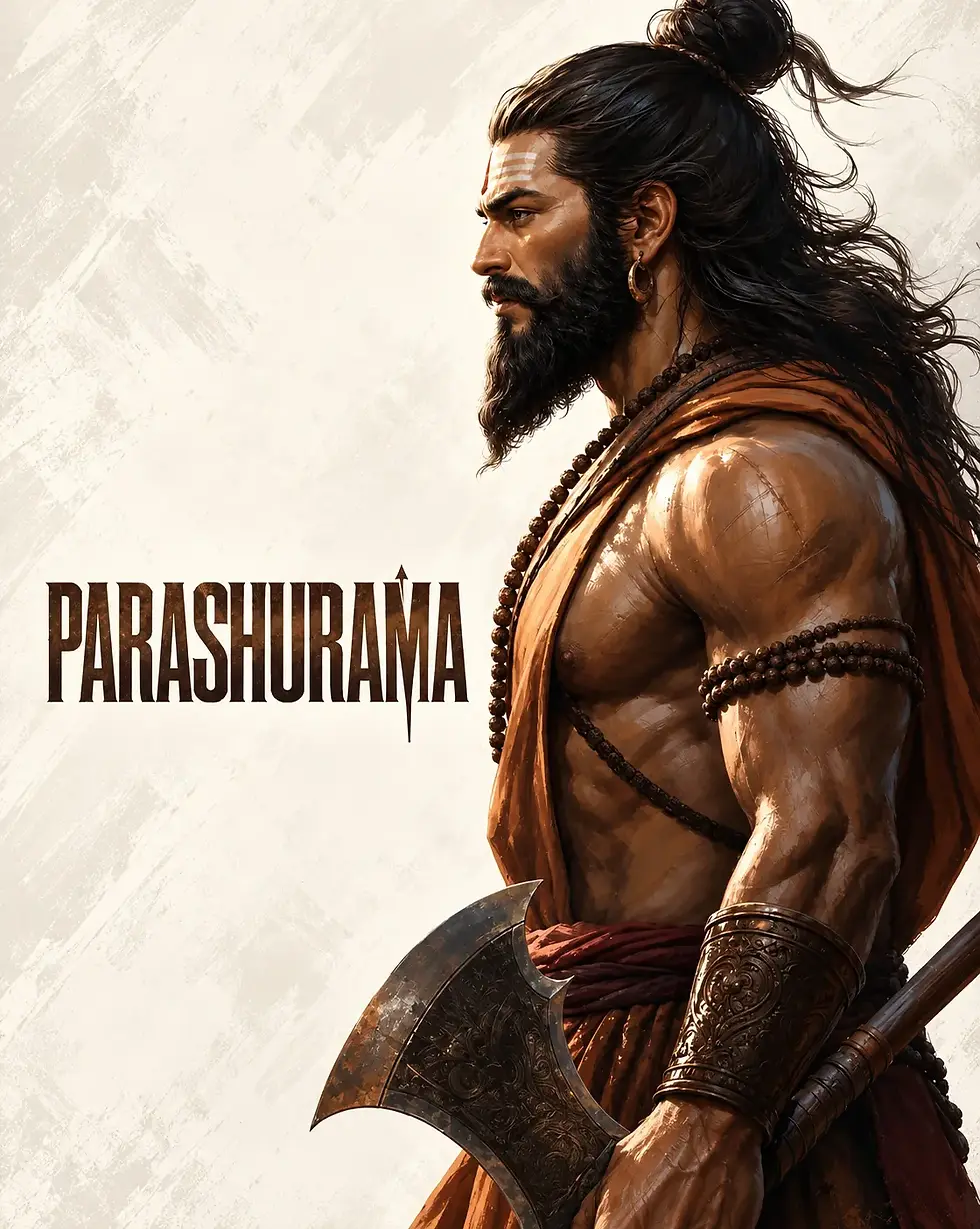
Why the name: “Parashu” means axe, so he is “Rama with the axe.” The axe was given to him by Shiva.
How he took the avatar: He was born as a Brahmin sage with a warrior’s fury.
What he faced: Corrupt kings who misused their power and attacked his family.
Outcome: He cleared the earth of tyrannical rulers many times. Tradition holds that he is a chiranjeevi (immortal).
7. Rama Avatar: (The Righteous)
Ravana, the ten-headed king of Lanka, had won boons that made him almost invincible, and he terrorised sages and devas. Vishnu was born as Rama, prince of Ayodhya and son of King Dasharatha, to end his rule. Through exile, loss, and war, Rama showed how a person should live by dharma.
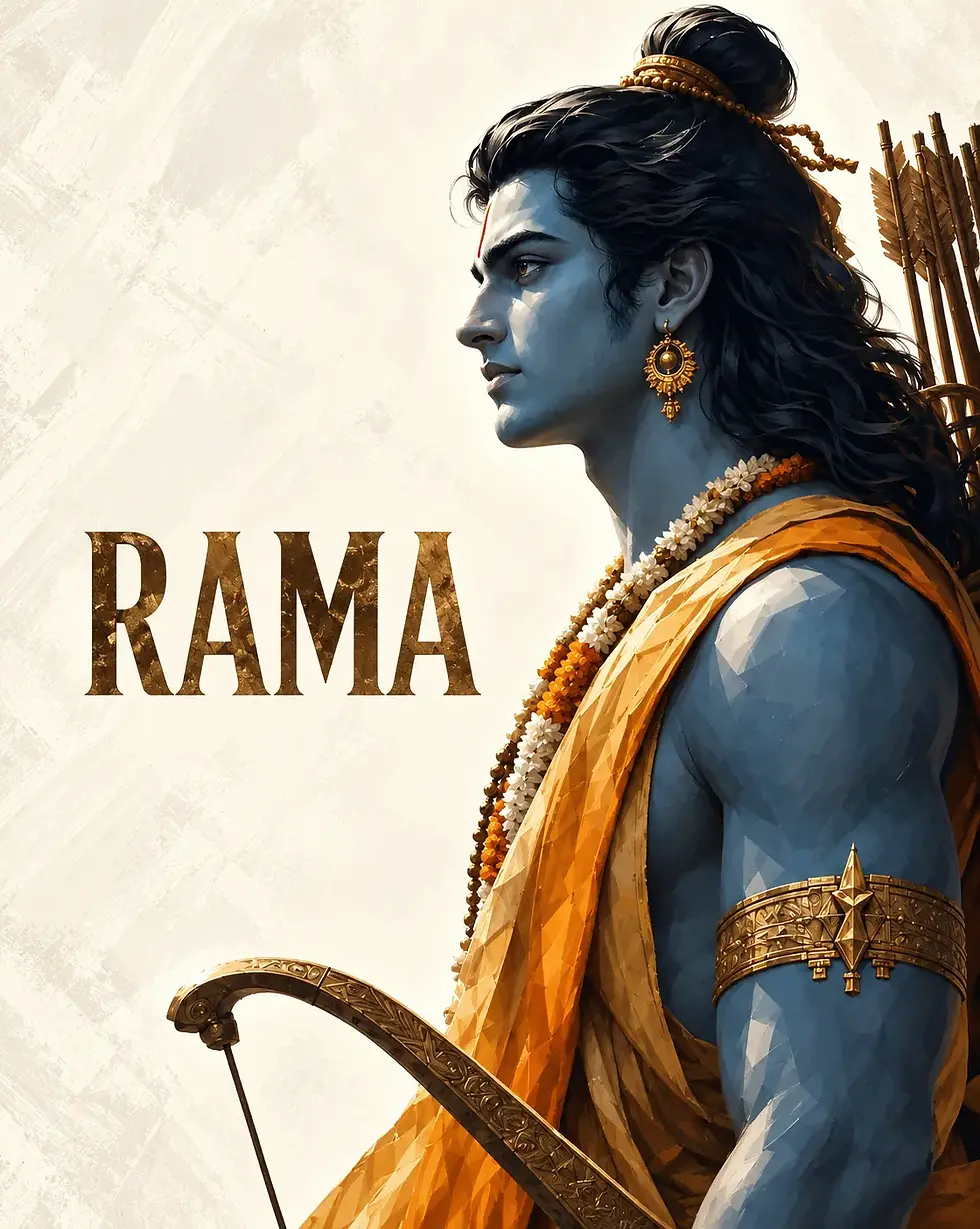
Why the name: “Rama” comes from a root meaning to delight or give joy. He is also called Maryada Purushottama, the perfect man.
How he took the avatar: He was born as a human with no divine display, since Ravana had overlooked humans in his boon.
What he faced: Fourteen years of exile, the abduction of Sita, and a war against Ravana’s army.
Outcome: With Hanuman and the vanara army, he built a bridge to Lanka and defeated Ravana. His return to Ayodhya is celebrated as Diwali.
8. Krishna Avatar: (The Divine Guide)
The tyrant Kamsa was terrorising Mathura and had imprisoned his sister Devaki and her husband Vasudeva. Krishna was born in the prison cell and secretly carried across the Yamuna to Gokul, where he grew up as a cowherd. Later, as Arjuna’s charioteer in the Mahabharata, he taught the Bhagavad Gita.
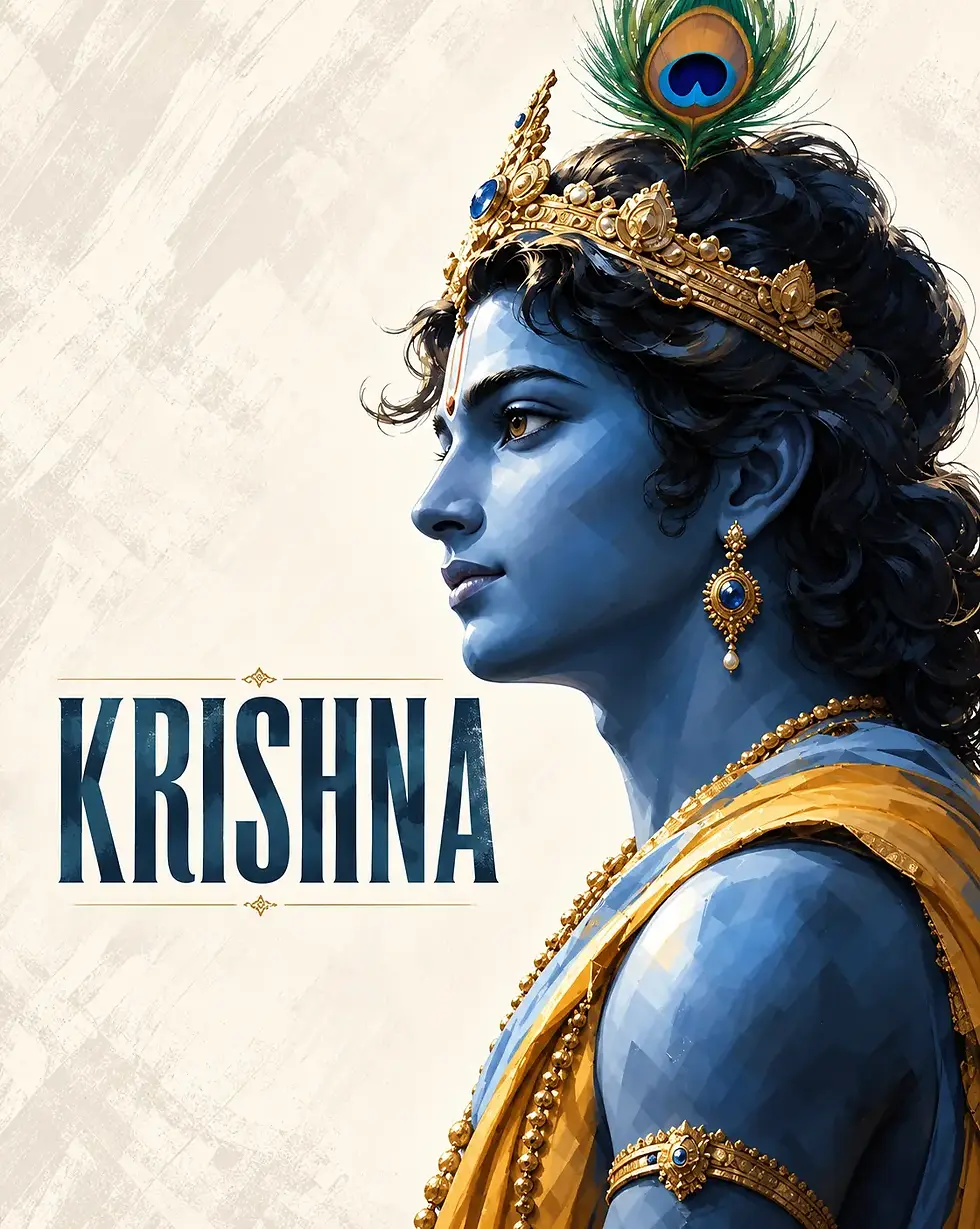
Why the name: “Krishna” means dark or dark-complexioned, and also “the one who draws everyone to himself.”
How he took the avatar: He was born as the eighth child of Devaki and Vasudeva.
What he faced: Kamsa’s attempts on his life, demons such as Putana and Kaliya, and later the great war of Kurukshetra.
Outcome: He killed Kamsa, founded Dwarka, and as Arjuna’s charioteer delivered the Bhagavad Gita.
9. Buddha Avatar: (The Awakened)
In many Puranic traditions, Buddha is counted as the ninth avatar of Vishnu. He appeared in the age of Kali, when the world was filled with suffering, ritual excess, and violence. His teaching guided people towards compassion, non-violence, and inner peace.
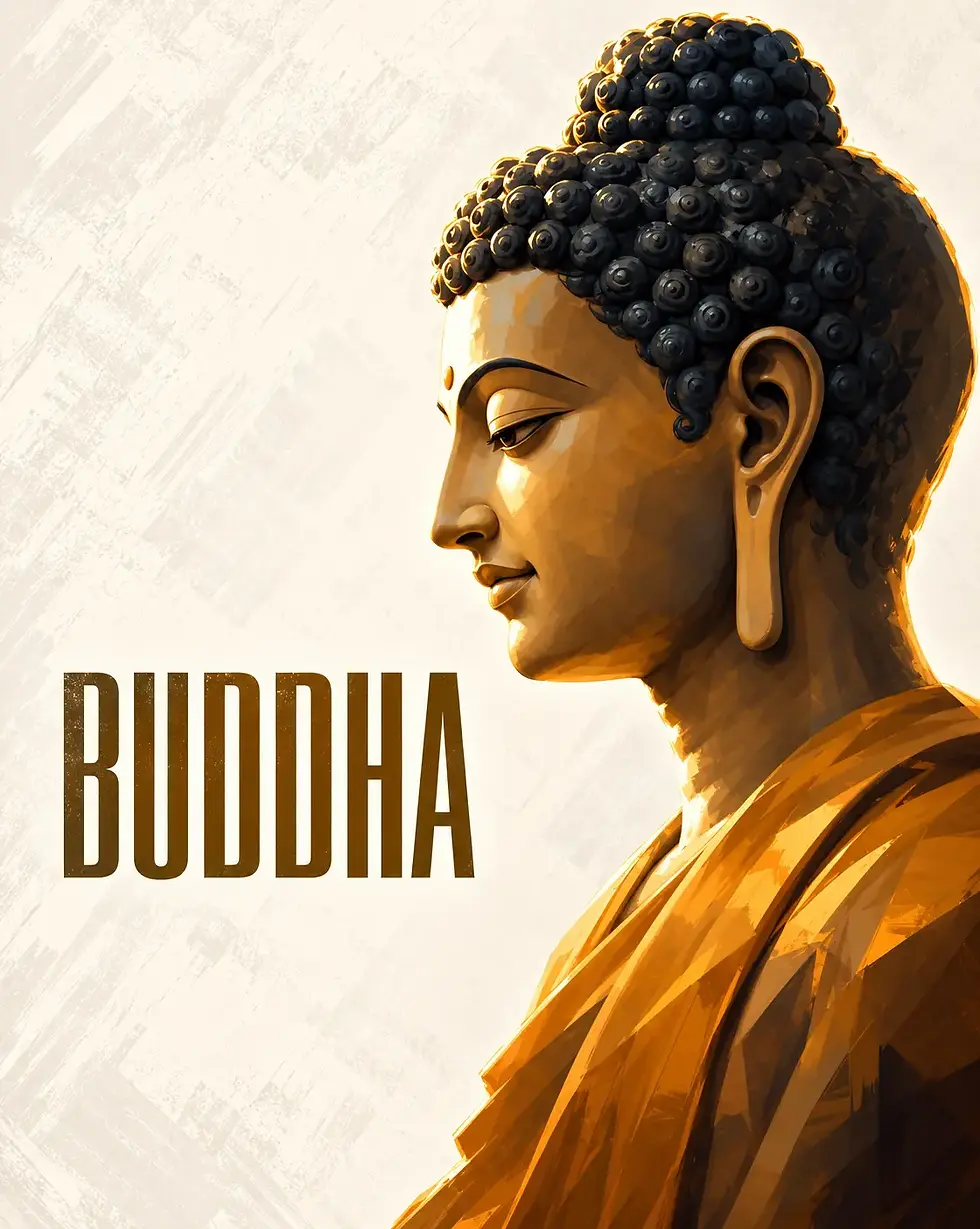
Why the name: “Buddha” means “the awakened one,” from the root “budh,” to awaken.
How he took the avatar: He appeared as a wise teacher, Siddhartha Gautama, born as a prince.
What he faced: A world of suffering, ritual excess, and violence.
Outcome: He taught compassion, mindfulness, and the middle path.
10. Kalki Avatar: (The Restorer)
This avatar has not yet appeared and is foretold in the Puranas. At the end of Kali Yuga, when dharma is nearly extinct and greed and injustice rule the world, Vishnu will come as Kalki. Riding a white horse and wielding a blazing sword, he will end evil and begin a new age of truth.
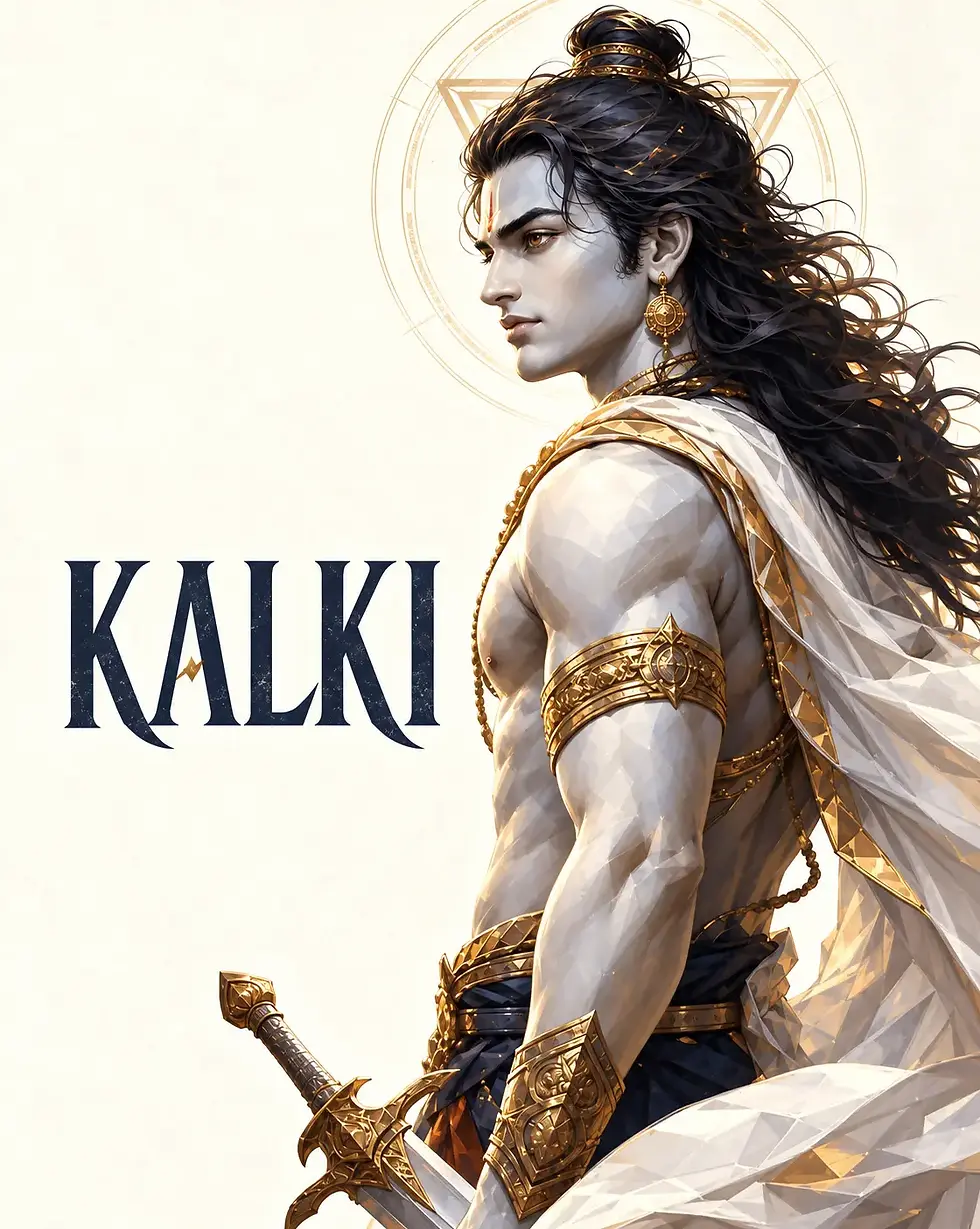
Why the name: Commonly linked to “kala” (time) or to “the destroyer of foulness.”
How he will take the avatar: He is foretold to be born in the village of Shambhala to a Brahmin family.
What he will face: A world overtaken by greed, falsehood, and injustice.
Expected outcome: He will end evil and begin a new Satya Yuga.
Deeper Meaning
Beyond the individual stories, the Dasavatharam is often read as a journey of life itself. It begins in water with Matsya, moves to the amphibian Kurma, then to the land animal Varaha. Narasimha marks the turning point between animal and human, Vamana is the human in an early, small form, and Parashurama, Rama, and Krishna show the full human and divine character. Buddha brings compassion and wisdom, and Kalki completes the cycle with renewal.
Each avatar also carries its own lesson:
Matsya: The Divine protects knowledge and life itself.
Kurma: Steady support and patience make great efforts succeed.
Varaha: When the world is at its lowest point, it is lifted back up.
Narasimha: Devotion is stronger than power, and arrogance cannot escape justice.
Vamana: Humility and surrender are greater than pride.
Parashurama: Power without righteousness must be checked.
Rama: Dharma means keeping your word and living with integrity, even in hardship.
Krishna: Act without attachment to results, and love sincerely.
Buddha: Compassion and non-violence lead to inner peace.
Kalki: No matter how dark the age, renewal is promised.
Whether the Dasavatharam is seen as devotion, symbolism, or ethical teaching, the message remains the same: whenever the world falls out of balance, divine grace restores it.
FAQs
What is Dasavatharam?
Dasavatharam means the ten descents of Lord Vishnu. “Dasa” means ten and “avatara” means descent. These are the ten main forms Vishnu took to protect the world and restore dharma whenever adharma grew too strong.
What are the ten avatars of Vishnu in order?
The ten avatars are Matsya (fish), Kurma (tortoise), Varaha (boar), Narasimha (man-lion), Vamana (dwarf Brahmin), Parashurama (warrior sage), Rama, Krishna, Buddha, and Kalki. In some traditions, Balarama is counted as the ninth avatar instead of Buddha.
Why does Lord Vishnu take avatars?
According to the Bhagavad Gita, Vishnu descends whenever dharma declines and adharma rises. He comes to protect the good, destroy evil, and re-establish righteousness. Each avatar appears for a specific crisis, such as a flood, a tyrant, or a stolen Earth.
Which avatar belongs to which yuga?
Matsya, Kurma, Varaha, and Narasimha appeared in Satya Yuga. Vamana, Parashurama, and Rama appeared in Treta Yuga. Krishna appeared in Dwapara Yuga. Buddha is placed in Kali Yuga, the present age, and Kalki is expected at the end of it.
Has the Kalki avatar appeared yet?
No. Kalki is the only avatar who is yet to come. The Puranas say he will appear at the end of Kali Yuga, riding a white horse with a blazing sword, to end evil and begin a new Satya Yuga.
Conclusion
The Dasavatharam is much more than a list of ten tales. It is a story of protection, justice, humility, devotion, duty, and hope. From rescuing the Vedas as a fish to the promise of Kalki yet to come, each avatar shows a different side of the Divine and teaches us how to live.
These stories have shaped temples, festivals, art, dance, and daily devotion across India and beyond. They remind us that even in the darkest times, balance can be restored, and that dharma, truth, and compassion will always find a way to return.
Comments