
The Yali: "The Creature That Guards South India's Oldest Temples"
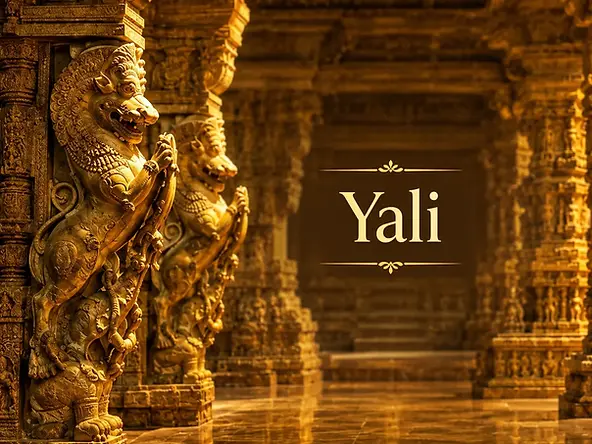
Yali
Walk into an ancient Tamil temple and look carefully at the pillars, entrances and gopurams. You may notice a strange and powerful creature with a lion-like body, a dramatic face and features that seem to combine different animals.
The Yali: The Creature That Guards South India's Oldest Temples. Yali is one of the most fascinating mythical creatures in South Indian temple art. It is commonly shown as a powerful composite animal, often with features of the lion, horse and elephant, although its exact appearance changes from one temple and artistic period to another. The Metropolitan Museum of Art, for example, documents rearing Yali sculptures associated with the Pudu Mandapa at the Meenakshi-Sundaresvara Temple in Madurai.
But why did ancient temple sculptors choose such an unusual creature?
Why Did Ancient Temple Sculptors Create the Yali?
The Yali was not simply invented as a decorative animal. Traditional South Indian temple sculpture frequently uses mythical and composite creatures to express extraordinary strength. The Yali's unusual body sets it apart from any ordinary animal, creating the impression of a creature stronger and more formidable than anything found in nature.

A Yali may appear in several poses:
Standing guard at an entrance
Rearing up on its hind legs
Attacking another creature, such as an elephant
Supporting a rider on its back
These compositions create a sense of movement, protection and controlled power. The exact symbolism was not identical in every temple, but the Yali became an enduring visual language of strength and guardianship in South Indian architecture.
Is Yali the Same as Sarabha?
Here the story becomes especially interesting.
In certain Shaiva Puranic traditions, after Lord Vishnu appeared as Narasimha and defeated Hiranyakashipu, Narasimha remained in a furious state. A later Shaiva narrative describes Shiva taking the extraordinary form of Sarabha to subdue that fury. The Shiva Purana describes Sarabha as a fearsome being with extraordinary strength, able to overcome even lions.
Scholars have interpreted this story as part of a theological tradition emphasizing Shiva's supremacy. A study of the Narasimha Purana notes that the episode appears in Shaivite texts such as the Linga Purana and Shiva Purana.
Sarabha vs Yali:
So are Sarabha and Yali the same? Not exactly:
Sarabha | Yali | |
Nature | A specific mythological form in certain Puranas | A South Indian artistic and architectural motif |
Source | Shaiva Puranic texts | Temple sculpture tradition |
Design | Described in text | Varies from temple to temple |
They should not be described as one and the same creature. Over time, though, their visual similarity has led popular explanations of temple sculpture to link the two.
Over time, the visual similarity between these powerful composite creatures has led popular explanations of temple sculpture to link the two, but they should not simply be described as one and the same.
Why Does Yali Look Like More Than One Animal?
Have you ever looked at a Yali and wondered: "Is it a lion? A horse? An elephant? Or something else?"

That confusion is exactly what makes the sculpture fascinating. Yali designs can include a lion-like head and body, a horse-like elongated form, elephant-like trunk features, exaggerated claws and other fantastical details. There is no single standardized Yali design across Tamil Nadu. The sculptor was not trying to copy an animal from nature; the purpose was to create an imaginary creature of extraordinary power.
This is why Yalis look so different from one temple to another. Some have pronounced tusks or trunks, others have horse-like features, and some appear much closer to powerful lions.
The Four Major Types of Yali
Students of temple art often classify Yalis by the animal whose features dominate the sculpture. Although there is no single standard system, four forms are commonly mentioned:
Simha-Yali: lion-based, with a powerful mane and claws, symbolizing royal strength
Gaja-Yali: elephant-based, with trunk or tusks, combining the power of two great animals
Ashva-Yali: horse-based, often shown rearing, suggesting speed and energy
Makara-Yali: blending Yali features with the mythical Makara
Sculptors did not always follow these categories strictly, which is why many Yalis combine features from more than one animal.
Why Do We See Yalis on Temple Pillars and Gopurams?
The placement of Yalis is just as interesting as their appearance. They are frequently found on pillars, entrances, mandapas and corridors, where they look as though they are guarding or supporting the sacred structure.
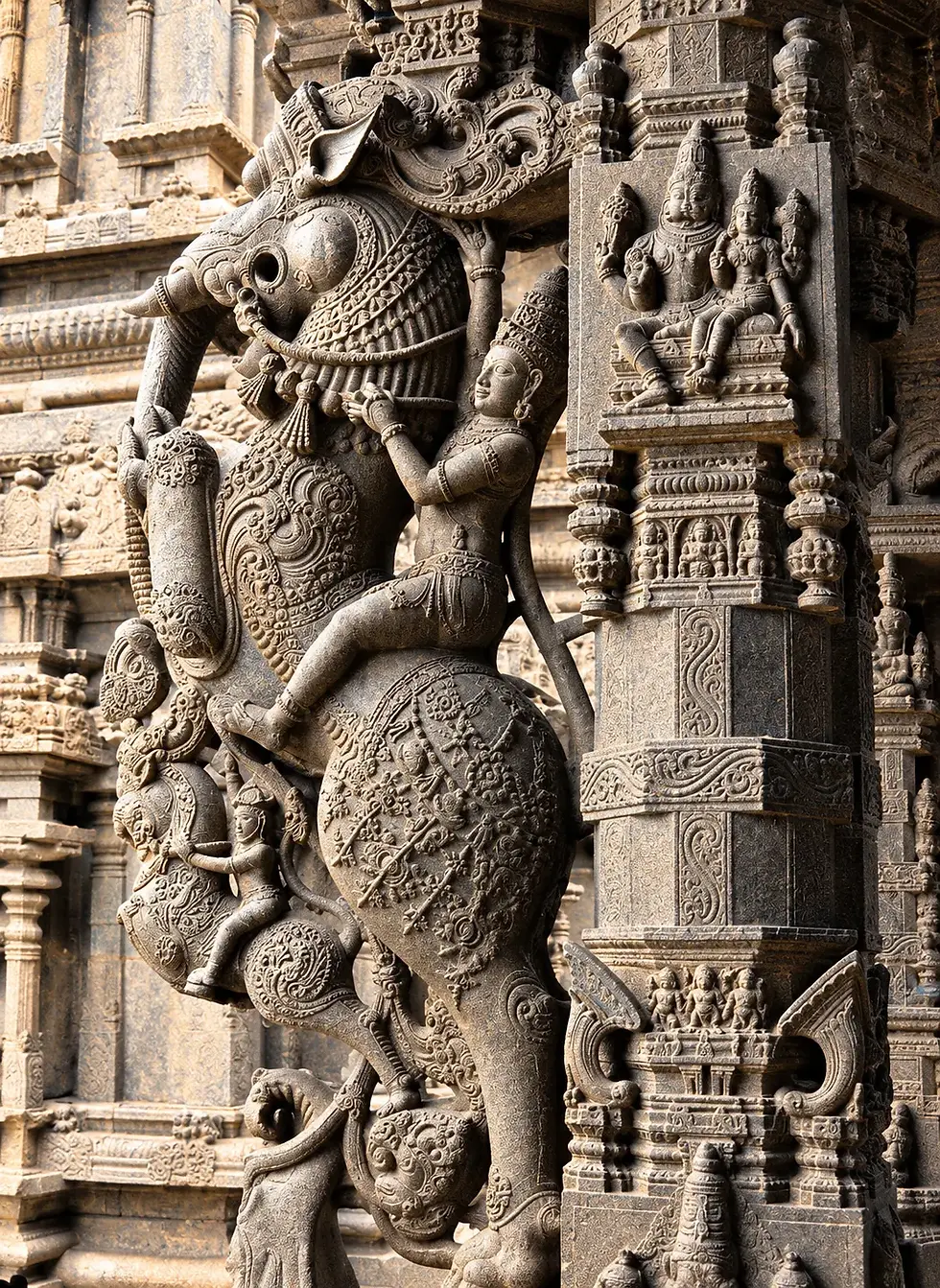
In the celebrated Pudu Mandapa at Madurai, Yali imagery forms part of an elaborate sculptural programme on the temple's pillars and architectural surfaces. The Metropolitan Museum's records identify the Pudu Mandapa as a festival hall added to the Meenakshi-Sundaresvara complex around 1630, with numerous elaborately sculpted piers and lintels.
This gives us a useful clue about how the Yali functioned in temple art. The creature could make a pillar appear alive, powerful and protective rather than merely structural. For a devotee entering the temple, this imagery creates a visual transition from the ordinary world toward a sacred environment.
Where Can You See Yalis?
The Yali: "The Creature That Guards South India's Oldest Temples"
Many of the grandest rearing Yali pillars come from the Nayak period (16th to 17th centuries), when temple mandapas became highly elaborate. Some places to look for them:
Madurai Meenakshi Amman Temple: the Pudu Mandapa's rearing Yali pillars
Srirangam Ranganathaswamy Temple: Nayak-period mandapas, some with riders on Yalis
Vellore Fort (Jalakandeswarar Temple): the kalyana mandapa pillars
Kanchipuram and Mahabalipuram: early Pallava temples with lion-based pillar designs, seen as forerunners of the Yali tradition
Rameswaram: the famous pillared corridors
Interesting Facts About the Yali

Beyond its look and placement, the Yali has some details that make it even more special. In some temples, sculptors carved a loose stone ball inside the Yali's open mouth, carved from the very same block of stone as the sculpture itself. The ball can roll freely inside the mouth but can never be removed a small detail that reveals the extraordinary precision of the craftsman's chisel work.
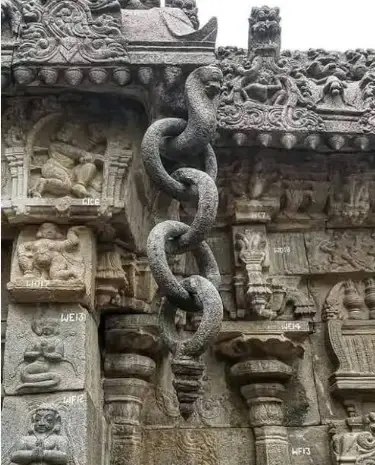
In other temples, sculptors went a step further and carved stone chains, again from a single block of stone, with each link free-moving yet unbroken. Creating a chain that was never joined, welded or assembled, but released whole from solid rock, is considered one of the most demanding feats in traditional stone carving.
A few more points worth knowing:
Yali vs Simha: A lion (Simha) is a natural animal, while the Yali is a more fantastic, mythical creature.
Yali vs Makara: Both are mythical hybrids in Indian art, but the Makara is aquatic, with a crocodile-like form.
Rider on Yali: Some pillars show a warrior mounted on a rearing Yali, which adds heroic energy.
Beyond Tamil Nadu: Similar creatures called Vyala also appear in Karnataka and Andhra Pradesh.
Other names: Yazhi (யாழி) in Tamil, and Vyala or Vyali in Sanskrit and temple-architecture texts.
Conclusion
The Yali is one of the most fascinating creatures in South Indian temple art. It does not belong to the natural world; it belongs to a world where sculptors combined animal characteristics and imagination to create a visual symbol of extraordinary power.
The later Sarabha story adds another layer to the tradition. Certain Shaiva Puranic texts describe Shiva taking the form of Sarabha to subdue Narasimha, but Sarabha and Yali should not be treated as universally identical.
What remains unmistakable is the importance of these powerful mythical forms in South Indian temple sculpture. From the pillars of historic Madurai to contemporary metal artwork, the Yali continues to represent strength, imagination, guardianship and the extraordinary creativity of Indian sculptors.
FAQs
What is a Yali?
The Yali is a mythical composite creature found in South Indian temple sculpture. It usually combines features of the lion, elephant and horse, and is shown as a powerful guardian figure.
What is Yali called in Tamil?
In Tamil it is called Yazhi (யாழி). In Sanskrit and temple-architecture texts it is often called Vyala or Vyali.
Why are Yalis carved on temple pillars?
They make the pillars look alive, powerful and protective. Their placement at entrances, mandapas and corridors gives the feeling that the sacred space is being guarded.
Is Yali the same as Sarabha?
No. Śarabha is a specific mythological form of Shiva described in certain Shaiva Puranic texts, while the Yali is mainly an artistic and architectural motif. Popular explanations often link them because of their visual similarity.
Is Yali a real animal?
No. The Yali is an imaginary creature created by sculptors to express extraordinary strength that no ordinary animal could show.
What are the main types of Yali?
Yalis are often classified by the animal they resemble most, such as Simha-Yali (lion), Gaja-Yali (elephant) and Ashva-Yali (horse). There is no single strict system, and many Yalis blend more than one animal.
Where can I see Yali sculptures in Tamil Nadu?
Some well-known places are the Pudu Mandapa at the Madurai Meenakshi Amman Temple, the Nayak-period mandapas of Srirangam, the Vellore Fort temple and the pillared corridors of Rameswaram.
Which period is famous for Yali pillars?
Many of the grandest rearing Yali pillars belong to the Nayak period (16th to 17th centuries), although lion-based forerunners appear in earlier Pallava temples.
What does the Yali symbolize?
It is generally understood to symbolize strength, protection and guardianship. The exact meaning was not identical in every temple.
Is the Yali only found in Tamil Nadu?
No. Similar Vyala figures also appear in other parts of South India, such as Karnataka and Andhra Pradesh, but the Yali is especially associated with Tamil temple art.
What is the difference between a Chola bronze and a stone sculpture?
Stone sculptures are carved, so material is taken away. Bronzes are cast, so a model is made first and metal is poured into a mould. Stone images were generally fixed in the temple, while many bronze idols were made to be carried in procession.

Comments