
Shiva and Parvati Had a Daughter. Why Does No One Talk About Her?
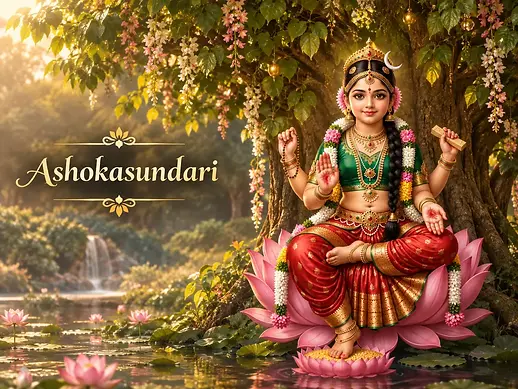
When people speak about the divine children of Lord Shiva and Goddess Parvati, the names of Lord Ganesha and Lord Murugan usually come first. However, according to certain Hindu traditions and regional stories, Shiva and Parvati also had a daughter named Ashokasundari.
Her story is less widely known, but it carries a beautiful meaning connected with companionship, comfort, beauty, and the removal of sorrow.
When people speak about the divine children of Lord Shiva and Goddess Parvati, the names of Lord Ganesha and Lord Murugan usually come first. However, according to certain Hindu traditions and regional stories, Shiva and Parvati also had a daughter named Ashokasundari.
Her story is less widely known, but it carries a beautiful meaning connected with companionship, comfort, beauty, and the removal of sorrow.
Who is Ashoka Sundari?
Ashokasundari is described in some traditions as the daughter of Lord Shiva and Goddess Parvati. Her name itself is associated with a meaningful idea.
The name Ashokasundari is commonly understood through the words Ashoka and Sundari. “Ashoka” is associated with freedom from sorrow or grief, while “Sundari” means beautiful woman or beautiful one.
Therefore, her name is often interpreted as “the beautiful one who removes sorrow.”
Her story is particularly connected with Goddess Parvati and the desire for companionship.
The Birth of Ashokasundari: A Divine Story
According to a popular version of the story, Goddess Parvati once felt lonely while Lord Shiva was away from Mount Kailash.
Wanting a companion who could be with her and ease her loneliness, Parvati Devi went to the Kalpavriksha, the celestial wish-fulfilling tree.
She expressed her wish for a daughter and companion. From the Kalpavriksha, Ashokasundari appeared.
Because she came into existence to comfort Goddess Parvati and take away her loneliness, the story connects her name with the idea of removing sorrow.
This is one reason Ashokasundari is remembered in some traditions as a daughter who brought happiness and companionship to Parvati Devi.
What Does "Ashokasundari" Mean?
The story of Ashokasundari is closely connected to the beautiful meaning of her name. According to tradition, Goddess Parvati was experiencing loneliness and sorrow and wished for a divine companion. The appearance of Ashokasundari brought a sense of happiness and companionship, giving deeper meaning to her name and story.
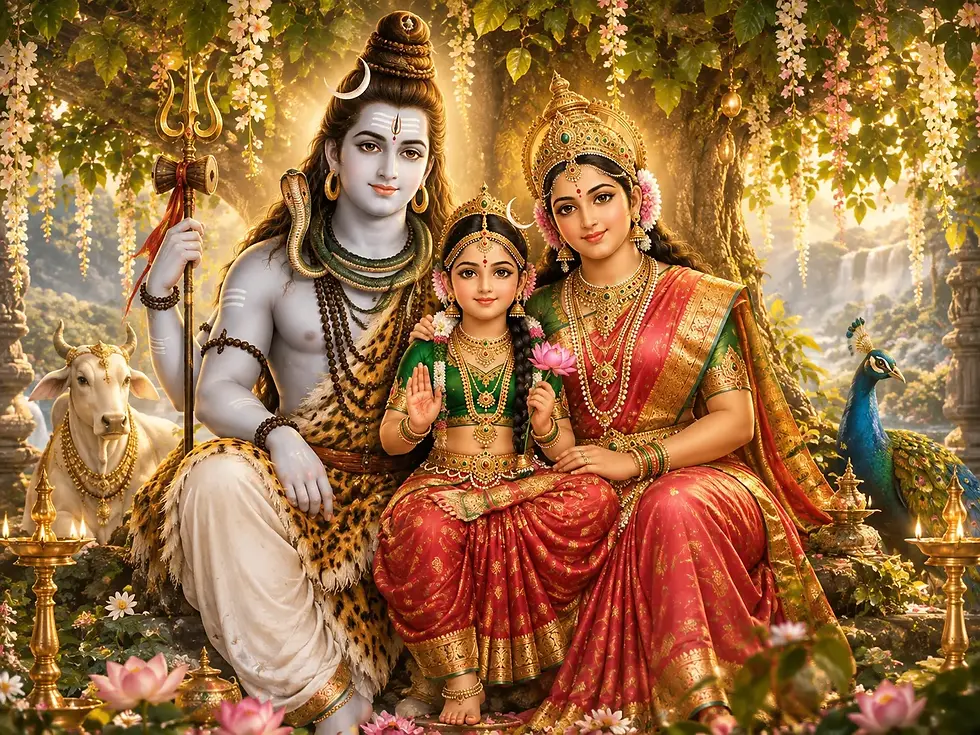
The name Ashokasundari can be understood by combining two Sanskrit words:
Ashoka – meaning without sorrow, grief, or sadness.
Sundari – meaning beautiful one or the beautiful Goddess.
Ashokasundari – together, the name symbolically represents “the beautiful one who is free from sorrow.”
This meaning adds a deeper dimension to her story. Ashokasundari is not simply remembered as the daughter of Lord Shiva and Goddess Parvati; her name also reflects the idea of beauty, happiness, companionship, and freedom from sorrow. Her story therefore carries a gentle message about how divine presence can transform loneliness and bring joy.
The Kalpavriksha and the Divine Origin of Ashokasundari
The Kalpavriksha occupies an important place in Hindu mythology. It is traditionally described as a divine tree capable of granting wishes.
In the Ashokasundari story, the tree becomes the setting for her creation.
Rather than being described as an ordinary birth, this version presents Ashokasundari as emerging through Parvati's wish. This makes her origin unusual and gives her a special connection with the divine world.
The story also highlights how a simple desire for companionship can become part of a larger divine narrative.
Ashokasundari and the Creation of Salt
Some regional and later traditions also associate Goddess Ashokasundari with the creation of salt. However, this part of her story is not consistently found across Hindu scriptures and should be understood as a tradition preserved in certain versions of the mythology.
According to these accounts:
Connection with salt: Ashokasundari is associated with the origin or creation of salt.
Regional tradition: This story appears in certain regional or later retellings rather than being a universally shared account.
Additional symbolism: The association gives Ashokasundari's mythology another cultural and symbolic dimension.
Different versions: Hindu mythology often contains variations across scriptures, regional traditions, oral storytelling, and later interpretations.
Therefore, the story of Ashokasundari and the creation of salt is best presented as a regional or later tradition, while recognising that different Hindu traditions may preserve different versions of her story.
Why Is Ashokasundari Less Known?
One interesting aspect of Ashokasundari's story is that she is much less familiar to many people than Ganesha and Murugan.
Ganesha is widely worshipped as the remover of obstacles, while Murugan is especially prominent in South Indian traditions. Their stories and temples are found across many parts of India.
Ashokasundari, however, has a more limited presence in popular worship and is not equally prominent in every Hindu tradition.
Her story is nevertheless an important example of how Hindu mythology contains many lesser-known divine figures whose stories have survived through particular texts and regional traditions.
A Story About Comfort and Companionship
At the heart of the Ashokasundari story is a simple human emotion: loneliness. Even Goddess Parvati, despite being a divine mother and goddess, is portrayed in this tradition as experiencing loneliness when Lord Shiva is away.
Her wish for a companion leads to the appearance of Ashokasundari, giving the story a deeper symbolic meaning. It reflects how companionship can bring comfort during moments of loneliness and how the presence of a loved one can transform sorrow into happiness.
In this sense, Ashokasundari is remembered not only as a daughter associated with Lord Shiva and Goddess Parvati, but also as a figure symbolising comfort, beauty, companionship, and freedom from sorrow. Her story reminds us that even a simple desire for companionship can become part of a meaningful divine narrative.
The Forgotten Daughter of Shiva and Parvati?
Ashokasundari is sometimes described as the “forgotten daughter” of Lord Shiva and Goddess Parvati because her story is much less familiar compared with the widely known stories of Ganesha and Murugan. However, this does not mean that she has been completely forgotten. Her story continues to appear in certain Hindu traditions and mythological accounts.
The term mainly reflects how lesser-known her mythology is in popular Hindu culture. Hindu mythology includes many divine figures whose stories are preserved through different scriptures, regional traditions, communities, and oral storytelling. While some deities are widely worshipped across India, others remain known mainly within particular traditions.
Ashokasundari is one such lesser-known figure associated with the divine family of Shiva and Parvati. Her story adds another interesting layer to the rich and diverse traditions surrounding the family of Lord Shiva.
Ashokasundari's Marriage to King Nahusha
According to the Padma Purana, Goddess Parvati created Ashokasundari from the Kalpavriksha, the wish-fulfilling tree, to ease her loneliness. Her name means "one who removes sorrow." Parvati blessed her with a husband as glorious as Indra.
The demon Hunda, who desired her, tricked and abducted her. Ashokasundari cursed him, declaring that he would die at the hands of her future husband, Nahusha, the virtuous son of King Ayu of the Lunar dynasty. As the tale goes, Nahusha later defeated Hunda and rescued her.
Ashokasundari then married Nahusha with the blessings of Shiva and Parvati. Together they had a hundred sons, and the eldest, Yayati, became one of the most celebrated kings in Hindu tradition.
Her story shows a daughter who brought joy to her parents, courage in the face of danger, and a lineage that shaped the great epics.
Conclusion
The story of Ashokasundari offers a different perspective on the divine family of Lord Shiva and Goddess Parvati.
Ashokasundari's story is a fascinating and lesser-known tradition connected with Lord Shiva and Goddess Parvati. Her association with the Kalpavriksha, her name symbolising freedom from sorrow, and the regional stories surrounding her make her mythology unique. Her story reminds us that Hindu mythology holds many beautiful narratives beyond the well-known stories of Ganesha and Murugan.
FAQs
Who is the daughter of Lord Shiva and Goddess Parvati?
Ashoka Sundari is described as the daughter of Lord Shiva and Goddess Parvati in certain Hindu traditions, particularly in stories found in the Padma Purana.
What is the name of Shiva and Parvati’s daughter?
Her name is Ashoka Sundari. She is also known by names such as Ashokasundari and Bala Tripurasundari in some traditions.
Who is Ashoka Sundari?
Ashoka Sundari is a lesser-known divine daughter associated with Shiva and Parvati. Her stories focus on her divine origin, beauty, blessings, and marriage to Nahusha.
Why is Ashoka Sundari less commonly known than Ganesha and Murugan?
Ganesha and Murugan have much more widespread worship and temple traditions across India. Ashoka Sundari appears mainly in particular scriptural and regional traditions, so her story is less widely known.
How was Ashoka Sundari born?
According to a traditional account, Goddess Parvati created or brought forth Ashoka Sundari from the divine Kalpavriksha while seeking companionship during Shiva’s absence.
What is the story of Ashoka Sundari and the Kalpavriksha?
The Kalpavriksha is described as a wish-fulfilling divine tree. In the traditional story, Parvati went to the tree and brought forth Ashoka Sundari from it.
What is the story of Ashoka Sundari and Nahusha?
Traditional accounts describe Ashoka Sundari as being destined to marry Nahusha. Their story forms an important part of the mythology surrounding her.
Why is Ashoka Sundari an important but lesser-known figure in Hindu mythology?
Ashoka Sundari is important within the traditions that preserve her story because she adds another dimension to the divine family of Shiva and Parvati. Her lesser-known status reflects the fact that her worship and stories are not as widely spread as those of Ganesha and Murugan.
Comments