
Thanjavur Brihadeeswarar Temple: Chola Heritage and Architecture

The Chola Empire wrote one of the golden chapters of Tamil history. Among its greatest achievements stands the Thanjavur Brihadeeswarar Temple, shining like a crown jewel. Lovingly called the "Big Temple"(Periya Koil). It still stands tall today as the ultimate expression of Chola artistry, engineering skill, and spiritual vision.
History and Origin Of Thanjavur Brihadeeswarar Temple
The temple was built during the reign of Raja Raja Chola I (985–1014 CE), widely regarded as the greatest of the Chola emperors. Historical records and inscriptions tell us that this massive structure was completed in just seven years, between 1003 and 1010 CE. The chief architect who built it, Kunjaramallan Rajaraja Perunthachan, is named in the temple's inscriptions.
It's believed that Raja Raja Chola built the temple as a tribute to both his military victories and his devotion to Lord Shiva. When it was built, the temple was named "Rajarajeswaram." Over time, it also came to be known by names like "Peruvudaiyar Kovil," "Thanjai Periya Kovil" (Thanjavur Big Temple), and "Dakshina Meru" (the Mount Meru of the South).
Architecture of the Temple
The most striking feature of the Brihadeeswarar Temple is its soaring tower, or vimana. Standing at about 216 feet (66 meters), it was one of the tallest structures in the world at the time it was built. The tower has thirteen tiers, and at its very top sits a single massive block of granite carved into a dome, or "kumbam" an engineering feat that still puzzles researchers today.

The entire temple is built from granite, which is remarkable because there are no natural granite sources anywhere near Thanjavur. Historians believe the stone must have been transported from far away. How the builders lifted such enormous stones especially the capstone at the very top of the tower using the technology of that era remains one of the temple's great unsolved engineering mysteries.
At the entrance stands a massive statue of Nandi, carved from a single rock and weighing around twenty tons a striking testament to the skill of Chola sculptors. And deep within the sanctum sits the temple's true centerpiece: a colossal Shiva lingam that leaves every visitor in awe.
The temple walls are covered in fine sculptures, paintings, and inscriptions that offer a treasure trove of information about Chola-era society, economy, and politics. These inscriptions record details of administration, taxation, and temple management from a thousand years ago.
The Distinctive Style of Chola Architecture
The Brihadeeswarar Temple is considered the finest expression of Dravidian architecture. Unlike the tall, inward-curving spires seen in North Indian temple architecture, the South Indian style features shorter, pyramid-shaped towers (vimanas) a defining characteristic. The Brihadeeswarar Temple showcases this distinction beautifully.
The temple complex spreads across roughly twenty-five acres and is surrounded by tall, protective fortified walls. Located on the banks of the Cauvery River, the temple also serves as the spiritual and cultural heart of the city of Thanjavur.
The Shiva Lingam in the Sanctum

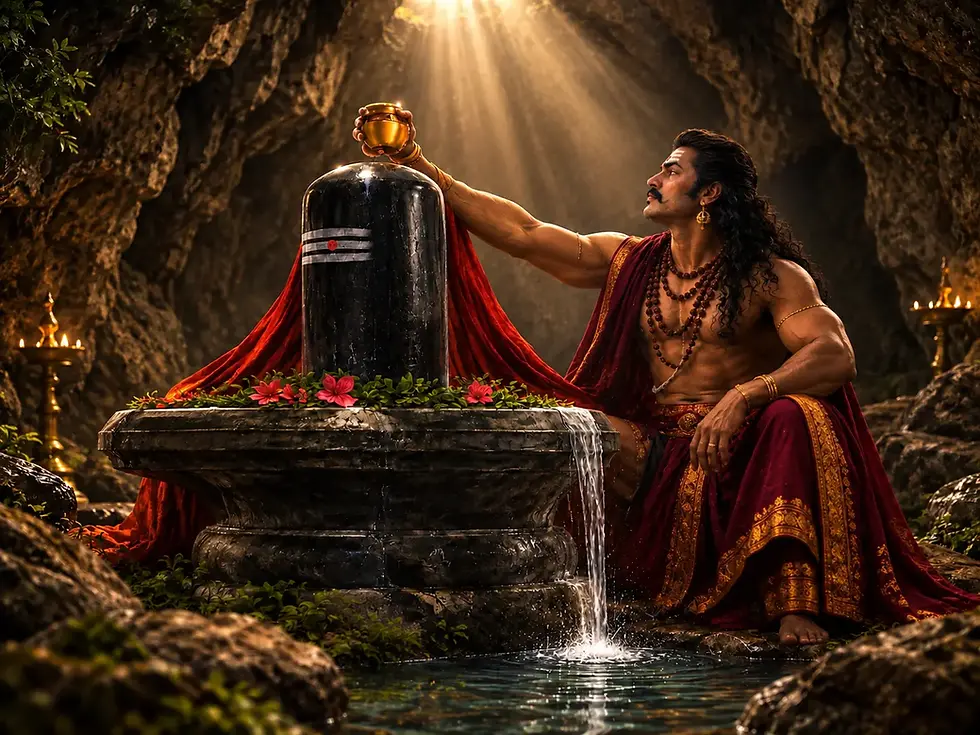
At the spiritual heart of the temple, inside the sanctum (garbhagriha), stands the massive Shiva lingam considered one of the tallest in India. Estimates of its height vary across sources, ranging from about 12 to 13 feet (roughly 3.5 to 4 meters), with some accounts placing it even higher. It's so enormous that the sanctum housing it was built two storeys tall just to accommodate it.
This lingam is known as "Peruvudaiyar" or "Rajarajeswaram Udaiyar". A name believed to be the origin of the temple's popular title, "Peruvudaiyar Kovil." According to legend, the lingam was brought from the banks of the Narmada River and kept growing larger after it arrived. Which is said to be how the deity came to be called "Brihadeeswara," meaning "the great lord."
The sanctum itself was designed with remarkable precision, following ancient architectural texts, so that light falls directly on the lingam. Beyond the main deity, the temple complex holds over 250 smaller Shiva lingams, especially along its pillared corridors, including a set of 108 black granite lingams gifted by the Maratha king Serfoji. Fittingly, the Nandi statue at the entrance faces directly toward this lingam eternally gazing upon Shiva in devotion.
Popular Legends and Stories
Generations of storytelling have wrapped the Brihadeeswarar Temple in colorful legends. While these aren't historical facts, they beautifully capture the wonder and devotion the temple has inspired in people for centuries.
The Growing Nandi: One popular tale says the giant Nandi statue at the entrance kept growing larger over time, until worried locals hammered a nail into its back to stop it. Another version claims a toad living beneath the statue was somehow responsible for its endless growth. Either way, the story reflects just how astonished people have always been by the sheer size of this sculpture.

The Tower With No Shadow: Perhaps the most famous legend of all that the tower's shadow never falls on the ground at noon, no matter the season. This is actually a clever optical effect created by the architects' precise planning, according to engineering experts, but the myth continues to fascinate visitors to this day.
Lifting an 80-Ton Capstone: How builders hoisted the 80-ton capstone to a height of 216 feet, without any machinery, remains a genuine puzzle. Historians believe a sloping ramp roughly six kilometers long was built, and elephants along with sheer manpower hauled the massive stone up. Some storytellers go further, describing it as a feat achieved through sacred chants and rituals.
Secret Tunnels Below: Locals also speak of hidden underground passages connecting the temple to the palace and other locations nearby. Some believe these were used to escape during wartime or to safeguard treasures.
While none of these stories are fully verified by historical evidence, they reveal just how deeply the Brihadeeswarar Temple has captured people's imagination for a thousand years.
Later History and UNESCO Recognition

After the Chola Empire declined, the temple was maintained under a succession of rulers. The Pandyas, the Delhi Sultanate, the Vijayanagara Empire, and the Madurai Nayaks. The Marathas, who ruled Thanjavur from 1674 to 1855, made significant contributions to its upkeep and renovation as well.
In recognition of its historical and cultural importance, UNESCO inscribed the temple on its World Heritage list under the title "Great Living Chola Temples," alongside the Gangaikonda Cholapuram and Airavatesvara temples. Together showcasing the brilliance of Chola architecture to the world.
In 2010, the temple celebrated its 1,000th anniversary a fitting tribute to the lasting glory of Chola achievement.
Conclusion
The Thanjavur Brihadeeswarar Temple is far more than a place of worship — it's a lasting symbol of the Chola Empire's engineering genius, artistic refinement, and spiritual depth. Built a thousand years ago, it still stands with the same grandeur, proudly telling the story of a golden age in Tamil history. For anyone who wants to experience Tamil heritage firsthand, a visit to this temple is truly unforgettable.
FAQs
What is Thanjavur Brihadeeswarar Temple?
Thanjavur Brihadeeswarar Temple is a famous Chola-era Shiva temple known for its grand Dravidian architecture, massive stone structure, and intricate sculptures.
Who built Brihadeeswarar Temple?
The temple was built by Chola King Rajaraja Chola I in the early 11th century as a grand temple dedicated to Lord Shiva.
Why is Brihadeeswarar Temple famous?
It is famous for its monumental architecture, towering vimana, stone construction, sculptures, inscriptions, and remarkable Chola engineering.
Where is Brihadeeswarar Temple located?
Brihadeeswarar Temple is located in Thanjavur, Tamil Nadu, and is one of the most important landmarks of Chola heritage.
Which deity is worshipped at Brihadeeswarar Temple?
Lord Shiva is the principal deity worshipped at the temple in the form of a magnificent Shiva Lingam.
What is the architectural style of Brihadeeswarar Temple?
The temple follows the Dravidian style of South Indian temple architecture, featuring a monumental vimana, stone structures, sculptural details, and an expansive temple complex.
What is the significance of the Shiva Lingam at Brihadeeswarar Temple?
The Shiva Lingam is the main sacred representation of Lord Shiva and is central to worship and rituals at the temple.
Can I buy a Brihadeeswarar-inspired bronze sculpture?
Yes, skilled bronze artisans can create sculptures inspired by Chola temple architecture, Shiva iconography, Nandi, and other traditional Thanjavur artistic elements.
What makes Thanjavur temple architecture unique?
Its monumental scale, carefully planned structure, detailed stone carvings, towering vimana, and engineering techniques make it a remarkable example of Chola architecture.
What type of sculptures can be seen at Brihadeeswarar Temple?
The temple features intricate sculptures depicting deities, divine figures, dancers, guardians, and other traditional artistic elements.
What is the role of Nandi in the temple?
Nandi is traditionally regarded as the sacred bull and devoted attendant of Lord Shiva, positioned facing the Shiva shrine.
What is the significance of the Chola bronze tradition?
The Chola period is also celebrated for exceptional bronze sculpture, known for graceful forms, detailed iconography, and advanced traditional metal-casting techniques.
What makes a Thanjavur-style bronze Shiva idol special?
A handcrafted bronze Shiva idol inspired by the Chola tradition reflects traditional iconography, graceful proportions, detailed ornamentation, and skilled artisan craftsmanship.
How old is Brihadeeswarar Temple?
The temple was completed in the early 11th century, making it more than a thousand years old.


Comments